What is a Fiber Laser Marking Machine? A Complete B2B Guide
News Details
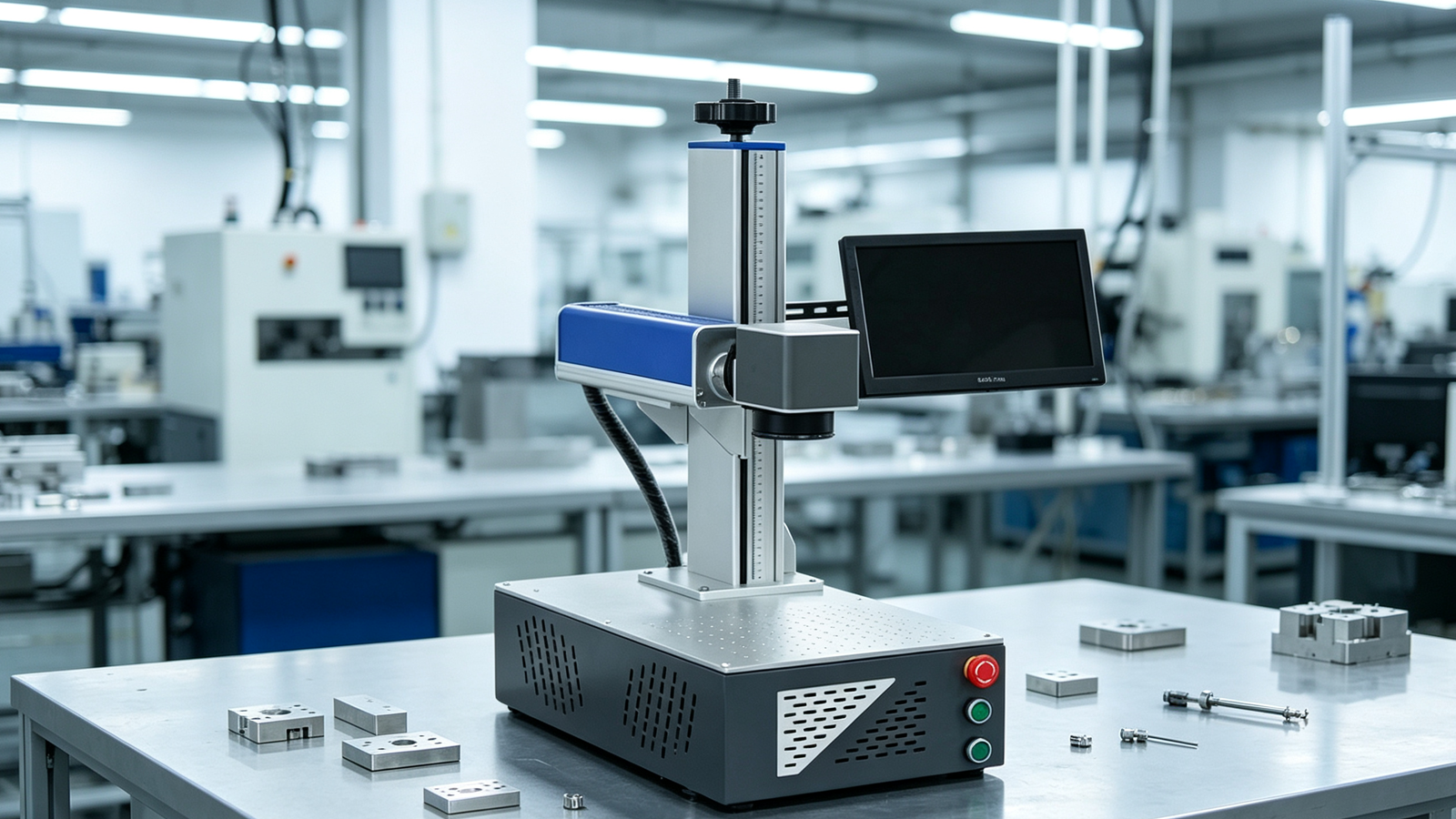
In modern industrial manufacturing, clear product identification is essential. Modern factories must add permanent barcodes, serial numbers, traceability matrix codes, and company logos onto thousands of products every day.
Among all modern marking technologies, the fiber laser marking machine stands out as the most reliable, precise, and fast solution available today. But what exactly is this equipment, how does it work, and why are manufacturing leaders adopting it worldwide?
Understanding Fiber Laser Technology
A laser fiber marking machine uses a solid-state laser source where optical fibers doped with rare-earth elements generate and amplify the laser beam. The high-energy light beam travels through a flexible fiber optic cable onto high-speed galvanometer mirrors. These mirrors direct the focused beam onto the surface of the material.
Unlike traditional ink printers or mechanical engravers, a fiber laser marker does not use ink, ribbons, or cutting needles. Instead, the focused laser beam interacts directly with the material surface through three primary methods:
-
Engraving: Removing material from the surface to create deep, lasting grooves.
-
Etching: Melting the outer layer to create high-contrast visual lines.
-
Annealing: Heating metals to create permanent color shifts under the surface without losing material.
Because the process is entirely contactless, delicate items experience no physical pressure or mechanical distortion.
Key Types of Fiber Laser Systems
Different production floors require different operational setups. Manufacturers select equipment based on part size, workshop space, and workflow requirements.
Compact Benchtop Models
A desktop fiber laser marking machine fits easily on a standard workbench or laboratory counter. These compact units are ideal for small workshops, jewelry makers, and electronic assembly shops that mark small components like circuit boards, chips, and small tools.
Mobile Field Units
For large, heavy workpieces that cannot easily move onto a conveyor belt, a portable laser marking machine provides total mobility. Workers can easily transport the unit across warehouse floors or job sites.
When operators need maximum physical freedom in tight spaces or high-reach areas, a handheld laser marking machine lets the user point and shoot directly at structural beams, large pipes, or heavy machinery parts.
Continuous Production Systems
For high-volume factories running continuous shifts, an industrial laser marking machine connects directly into automated conveyor lines. These heavy-duty fiber laser marking machines offer protective enclosures, automated Z-axis positioning, and 24/7 operating capacity.
Materials Compatible with Fiber Lasers
One major advantage of fiber laser equipment is its ability to process a wide range of industrial materials cleanly and quickly.
Metal Processing
Fiber lasers are famously efficient on conductive metals. A high-performance laser marking machine for metal processes stainless steel, aluminum, brass, copper, titanium, and carbon steel effortlessly. High absorption rates at the 1064nm wavelength allow the beam to create razor-sharp, readable codes on metal surfaces.
Plastics and Polymers
Many consumer items and vehicle parts use synthetic materials. A modern laser marking machine for plastic alters surface colors without burning or melting the plastic structure. It produces smooth text and barcodes on ABS, PVC, polycarbonate, and polyethylene.
Glass and Non-Metals
While standard fiber lasers excel on metals and opaque polymers, specialized wavelengths or MOPA fiber systems act as a laser marking machine for glass and delicate coated substrates, creating clear markings without micro-cracking the surrounding glass structure.
Operational Advantages for Businesses
Upgrading to fiber laser equipment delivers clear operational and financial benefits for manufacturing facilities:
-
Low Maintenance: With no moving parts inside the laser source, these systems require minimal routine upkeep.
-
Zero Consumables: Eliminates expensive ink cartridges, chemical solvents, and replacement styluses.
-
Long Lifespan: Fiber laser sources typically last up to 100,000 operational hours.
-
High Precision: Reaches line widths as thin as 0.01mm for micro-text and complex QR codes.
-
Energy Efficiency: Consumes significantly less electricity than older CO2 or YAG laser systems.
Understanding Fiber Laser Marking Machine Price Factors
When budgeting for new equipment, buyers will find that the fiber laser marking machine price varies based on several core technical specifications:
| Feature Factor | Entry-Level Options | High-End / Industrial Options |
| Laser Power (20W - 100W+) | 20W to 30W (Ideal for light surface marking) | 50W to 100W+ (Required for deep engraving & fast cutting) |
| System Form Factor | Compact Desktop / Handheld | Enclosed Automated Inline Stations |
| Laser Source Type | Standard Q-Switched Fiber | MOPA Fiber (Adjustable pulse width for color marking) |
| Software & Automation | Manual Focus & Basic Software | Auto-Focus, Vision Cameras, & Conveyor Integration |
Entry-level benchtop units usually start at competitive price points, while fully automated, high-power industrial lines cost more due to advanced optics and automation systems.
Selecting the Right Equipment Supplier
Choosing the right partner is just as critical as selecting the machine itself. A trusted fiber laser marking machine supplier provides long-term technical support, software training, operator safety guidance, and warranty coverage.
Leading industry manufacturers like YSD Laser design robust, high-precision laser equipment built to withstand rigorous factory conditions while keeping operating costs low.
Conclusion
A fiber laser marking machine is a powerful investment for any business seeking fast, permanent, and accurate product identification. Whether you need to mark stainless steel hardware, delicate plastic housings, or glass containers, fiber laser technology delivers clean results without messy inks or frequent downtime. By understanding your material needs and production volume, you can select the ideal machine to optimize your manufacturing workflow.


