Do Laser Cleaning Machines Really Work? An Honest Industrial Guide
News Details
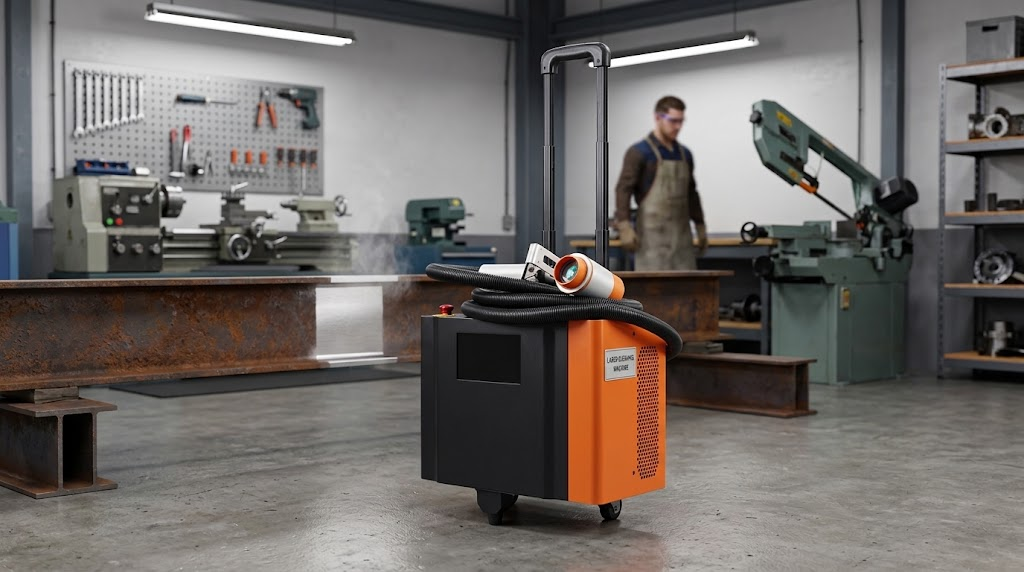
Many workshop managers and industrial buyers ask the same fundamental question: do laser cleaning machines really work, or are they just an expensive trend?
The short answer is yes—a modern laser cleaning machine delivers outstanding results for surface restoration. Instead of relying on harsh chemicals, dusty sandblasting, or tedious hand scraping, high-energy light beams instantly strip away rust, paint, oil, and oxide layers.
At Yuanshida, we design high-performance industrial laser equipment built to tackle heavy-duty metal preparation. Let us explore the real mechanics behind this technology, how it compares to traditional cleaning methods, and what you can expect when investing in laser surface treatment.
How Does a Laser Cleaning Machine Actually Work?
Laser cleaning works through a process called laser ablation. When the laser light strikes a surface, the top layer of rust, paint, or grease absorbs the intense thermal energy. Within micro-seconds, the unwanted contaminants vaporize or expand rapidly and separate from the base metal.
Crucially, the underlying metal reflects the laser energy once the surface contaminants are removed. This means the process stops automatically before harming your valuable component. Operators hold an ergonomic laser cleaning gun to sweep across complex metal geometries with ease, ensuring uniform cleanliness without altering delicate surface tolerances.
Laser Cleaning vs. Traditional Surface Preparation Methods
To understand why factory owners are switching to laser systems, let us compare them against conventional cleaning solutions:
Sandblasting and Abrasive Media
Sandblasting is effective, yet it generates massive dust clouds and leaves abrasive media embedded in metal parts. Moreover, sandblasting wears down thin metal walls and delicate molds over time. In contrast, laser cleaning produces zero physical wear and requires no abrasive media purchasing.
Chemical Solvent Stripping
Chemical baths require hazardous fluids, extensive safety gear, and expensive disposal procedures for toxic waste. Laser rust removal is completely dry and eco-friendly, using only electrical power to operate.
Mechanical Grinding and Scraping
Manual scraping is labor-intensive and inconsistent across large production runs. High-power portable laser cleaning machines speed up surface preparation significantly, reducing labor hours and operator fatigue.
Key Industrial Applications: Where Laser Cleaning Excels
Industrial facilities deploy Yuanshida laser technology across various demanding applications:
-
Heavy Industrial Rust Removal: A specialized laser rust cleaning machine quickly strips thick corrosion from structural steel, pipelines, and heavy machinery parts.
-
Paint Stripping and Coating Removal: Effortlessly remove old paint coats, epoxy layers, and varnish before recoating.
-
Mold Maintenance: Clean rubber molds, plastic injection tooling, and baking trays without damaging micro-textured edges.
-
Pre-Weld and Post-Weld Treatment: Remove oxide layers and oils before welding to ensure strong joint integrity, then clean weld seams afterward.
Continuous Wave vs. Pulse Laser Cleaner: Which Is Right for You?
Selecting the proper system configuration depends on your target material and surface sensitivity:
Continuous Wave (CW) Laser Systems
Continuous wave machines offer high energy output at a cost-effective price. They work best for heavy steel fabrication, large vessel maintenance, and thick rust layers where maximum cleaning speed is the primary goal.
Pulse Laser Cleaner
A pulse laser cleaner fires brief, high-intensity pulses of light. This limits heat buildup in the substrate, making it ideal for precision tools, historic artifacts, thin aluminum sheets, and delicate aerospace components where heat distortion must be avoided.
Understanding the Investment and Laser Cleaning Machine Price
When evaluating equipment costs, you will notice that the laser cleaning machine price varies depending on laser wattage, laser source type, and machine design:
-
Laser Output Power: Entry-level 100W/200W precision units suit light mold cleaning, whereas 1000W to 3000W high-power machines handle heavy industrial rust stripping.
-
Laser Source Type: A specialized pulse laser cleaner costs more than a continuous wave unit due to complex optical controls and minimal thermal impact.
-
Portability: Compact portable laser cleaning machines designed for field service and outdoor repair offer flexible operation compared to large stationary workstations.
While the upfront equipment cost exceeds basic power tools, a laser rust removal machine eliminates ongoing consumable expenses, media purchasing, and hazardous waste fees. As a result, most production facilities recover their investment within a remarkably short period through reduced labor and material savings.
Why Choose Yuanshida Laser Equipment?
Yuanshida designs industrial laser systems engineered for continuous duty, exceptional safety, and user-friendly operation. Our portable units feature lightweight handheld guns, robust cooling systems, and intuitive touchscreen control panels for seamless integration into your existing shop workflow.
Whether you need a compact field unit or a heavy-duty production line cleaner, we offer full technical guidance, spare parts support, and tailored configurations. Visit our website today to learn more about our surface cleaning solutions or request a custom quote for your business.


