Laser Cleaning Machines for Rust Removal: Applications and Buying Checklist
News Details
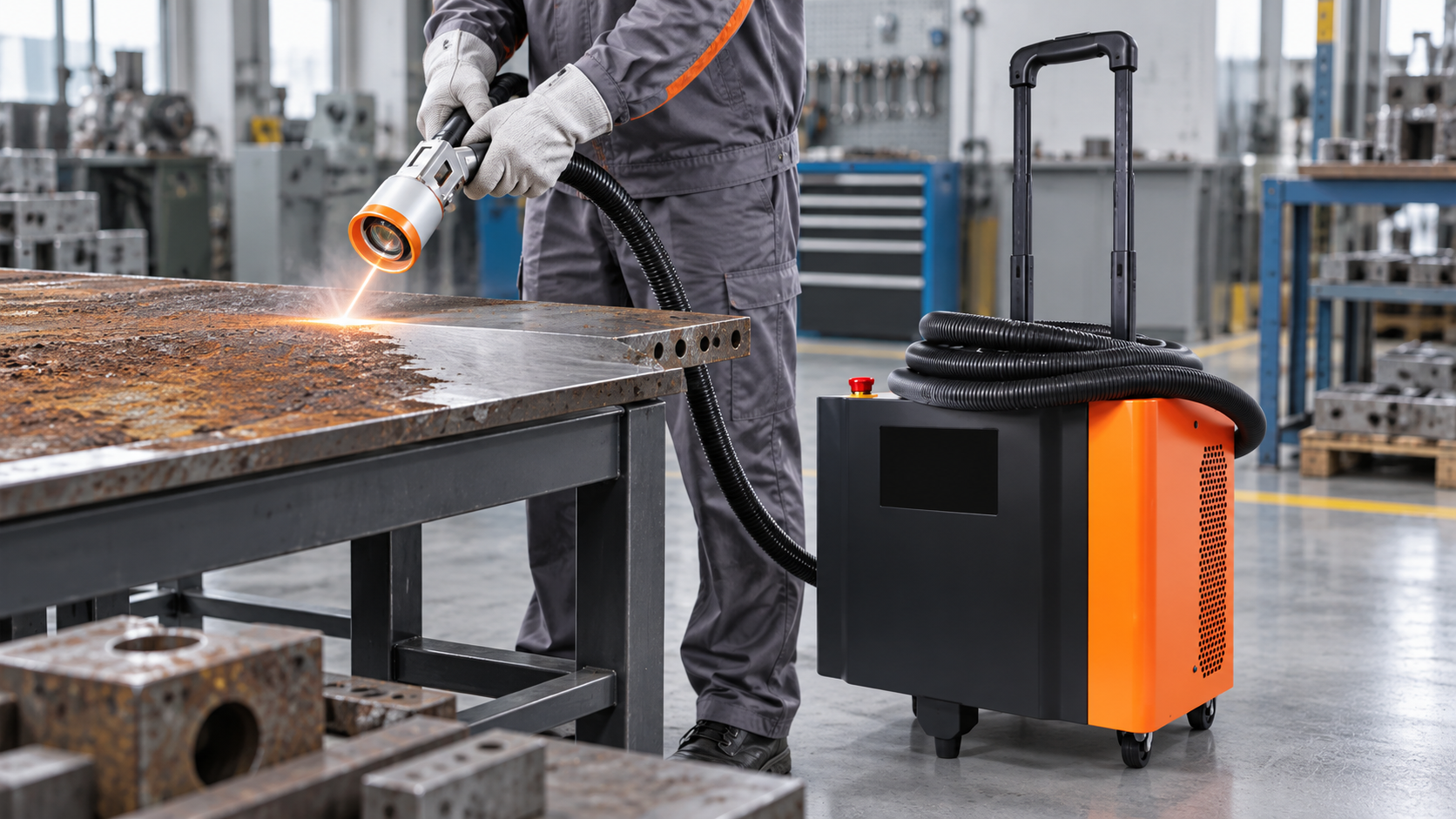
Rust removal is a daily challenge for many factories, repair shops, shipyards, and metal processing companies. Traditional methods, such as sandblasting, grinding, and chemical cleaning, can be slow, messy, and costly. They may also damage the base material if the process is not well controlled.
A laser cleaning machine offers a cleaner and more precise way to remove rust from metal surfaces. It uses a focused laser beam to remove rust, oxide layers, paint, oil, and other surface dirt without direct contact. As a result, it can help companies improve cleaning quality, reduce consumables, and make surface preparation easier.
For B2B buyers, choosing the right laser rust removal machine is not only about price. You also need to consider the material, rust level, work area, power, cooling method, safety, and after-sales support.
What Is aLaser Cleaning Machine?
A laser cleaning machine is industrial equipment used to clean surfaces with laser energy. When the laser beam reaches the rust layer, the unwanted material absorbs the energy and is removed from the surface. At the same time, the base metal can stay protected when the right settings are used.
In most industrial rust removal projects, buyers often choose a pulse laser cleaner because it offers high control and low heat impact. This makes it suitable for molds, precision parts, weld areas, tools, and metal parts that need careful cleaning.
Many systems also use a handheld laser cleaning gun. This makes the machine easier to use on large parts, fixed equipment, curved surfaces, and areas that are hard to move.
Why Use Laser Rust Removal?
First, laser cleaning is a non-contact process. So, there is no grinding wheel, abrasive media, or chemical liquid touching the part. This helps reduce wear on the workpiece.
Second, it can lower operating costs over time. Although the first investment may be higher than some traditional tools, the process needs fewer consumables. In many workshops, this means less waste, less cleanup, and fewer material handling steps.
Also, laser cleaning is easy to control. Operators can adjust power, speed, frequency, and cleaning width based on the rust level and material type. Therefore, the same machine can support different jobs in one facility.
Common Applications for Rust Removal
A laser rust removal machine can be used in many B2B industries. Common applications include metal fabrication, machinery repair, automotive parts, ship repair, rail equipment, steel structures, molds, and hardware products.
In metal fabrication, laser cleaning can prepare parts before welding, coating, or painting. Clean metal surfaces help improve coating adhesion and final product quality.
In machinery repair, it can remove rust from shafts, gears, frames, and spare parts. Since the process is precise, it is useful for parts that need to keep their shape and size.
In mold maintenance, a pulse laser cleaner can remove oxide, oil, and light rust from mold surfaces. This can help extend mold life and reduce downtime.
In shipyards and large equipment repair, a handheld laser cleaning gun makes it easier to clean local rust spots, weld seams, and complex surfaces without moving heavy parts.
Pulse Laser Cleaner vs. Continuous Laser Cleaner
Before buying, it is important to know the difference between pulse and continuous laser cleaning.
A pulse laser cleaner releases laser energy in short pulses. It is often preferred for precise rust removal, light paint removal, mold cleaning, and cleaning parts with higher surface quality needs. Because the heat input is easier to control, it is a strong choice for delicate or high-value parts.
A continuous laser cleaner releases laser energy in a steady beam. It is often used for larger areas, heavier rust, and high-speed cleaning tasks. However, it may create more heat, so buyers should match it carefully with their materials and process needs.
For many B2B buyers, the best choice depends on the type of rust, part value, cleaning speed, and surface quality requirements.
Key Benefits for Industrial Buyers
A laser cleaning machine can bring several practical benefits to production and maintenance teams.
It can reduce dust and waste compared with abrasive blasting. It can also remove the need for many chemical cleaners. In addition, it can support selective cleaning, which means operators can clean only the target area without treating the whole part.
The process is also easier to automate. For high-volume production, laser cleaning can be added to robotic arms, moving platforms, or production lines. For repair and maintenance work, handheld systems offer more flexibility.
Most importantly, laser cleaning can help improve consistency. Once the right parameters are set, operators can repeat the same cleaning effect across many parts.
Buying Checklist for a Laser Cleaning Machine
When comparing machines, start with your material. Confirm whether you need to clean carbon steel, stainless steel, aluminum, copper, or coated metal. Different materials may need different laser settings.
Next, check the rust level. Light rust, heavy rust, paint, oil, oxide, and welding marks may require different power levels and cleaning methods.
Then, review the working size. If you clean small precision parts, a compact pulse laser cleaner may be enough. If you clean large frames, tanks, or steel plates, you may need higher power and a wider cleaning path.
Also, consider the cooling method. Air-cooled systems are usually more compact and easier to move. Water-cooled systems may be better for long, high-power work.
The laser cleaning gun should be comfortable, stable, and easy to control. For long shifts, gun weight and cable flexibility matter a lot.
You should also check machine safety. Ask about protective glasses, warning systems, emergency stop buttons, enclosure options, and operator training.
Finally, review supplier support. A good supplier should help with machine selection, sample testing, operation training, spare parts, and technical service.
Questions to Ask Before Ordering
Before placing an order, ask these questions:
What power is best for my rust removal job?
Can the supplier test my sample parts?
Is the machine suitable for my material and surface quality needs?
How fast can it clean my typical workpiece?
Is the system air-cooled or water-cooled?
What safety protection is included?
Can the parameters be saved for repeat jobs?
What training and after-sales support are available?
Are spare parts easy to get?
Can the machine support future automation?
These questions help you avoid choosing a machine that looks good on paper but does not fit your real work.
Why Choose Yuanshida?
Yuanshida focuses on industrial laser equipment for global buyers, including laser marking and laser cleaning solutions. Its product range includes handheld, desktop, benchtop, and laser cleaning machines for different production needs.
For rust removal, Yuanshida offers practical laser cleaning options, including pulsed laser cleaning equipment for rust, paint, and oxide removal. With experience in industrial laser applications, Yuanshida can support buyers in selecting a machine based on their material, cleaning task, and production goals.
Final Thoughts
A laser cleaning machine is a smart choice for companies that need clean, controlled, and efficient rust removal. It can help reduce manual work, cut consumable use, and improve surface preparation quality.
However, the right choice depends on your real application. Before buying a laser rust removal machine, compare the rust level, material type, cleaning speed, cooling method, laser cleaning gun design, and supplier support.
With the right pulse laser cleaner, your business can clean metal parts faster, protect valuable surfaces, and build a more stable rust removal process.


