Fiber Laser Marking for Metal Parts, Tools and Automotive Components
News Details
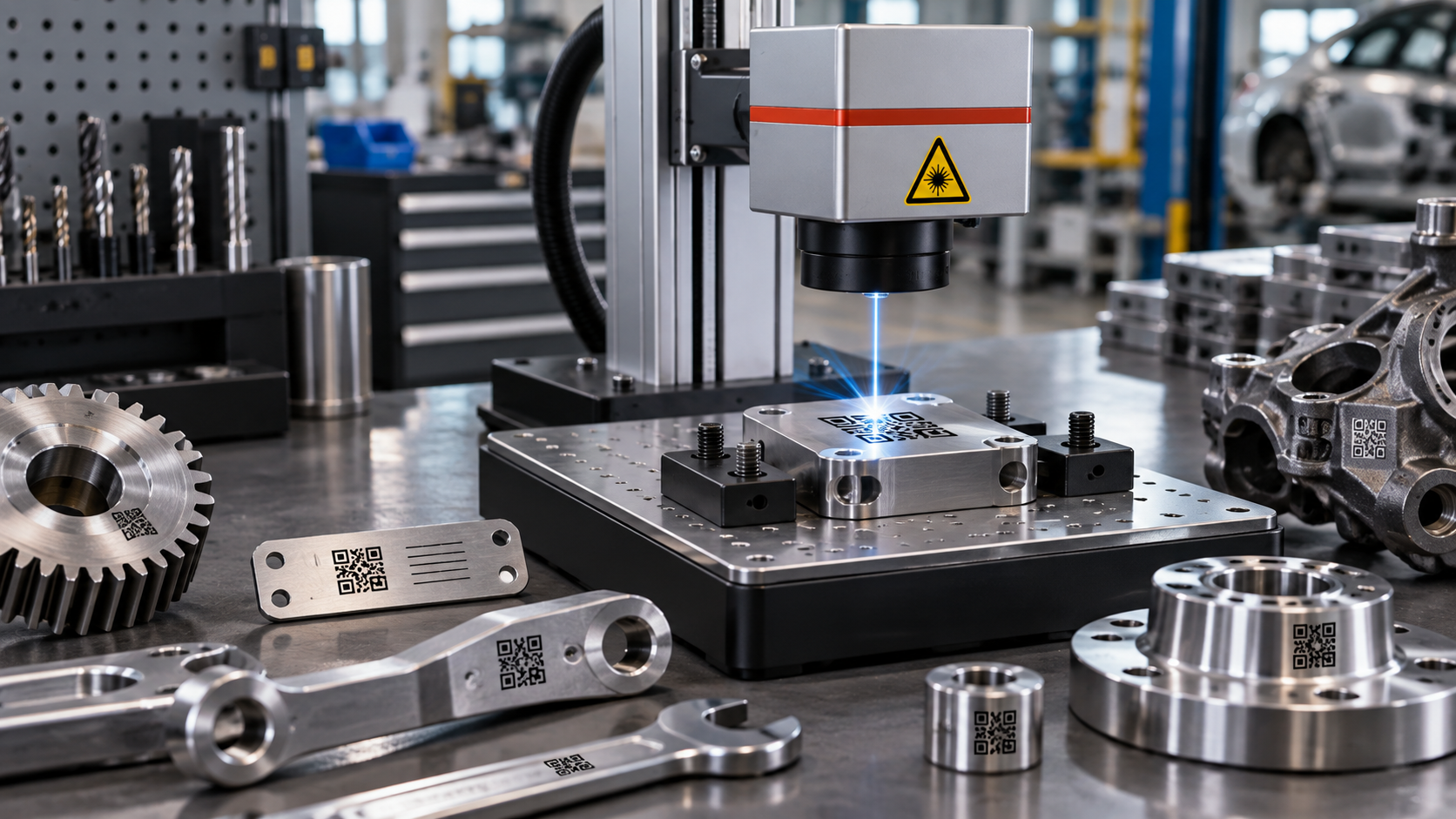
Clear and permanent marks are important in modern manufacturing. Metal parts, tools, and automotive components often need logos, model numbers, QR codes, barcodes, and traceability codes. These marks must stay readable after storage, assembly, transport, and daily use.
For this reason, many factories choose a fiber laser marking machine for metal. It can create sharp, clean, and long-lasting marks on many metal surfaces. Also, it does not need ink, labels, or chemical consumables. This helps reduce daily running costs and makes the process easier to manage.
Yuanshida provides industrial laser marking equipment for global buyers, including desktop, handheld, portable, and benchtop fiber laser marking solutions. These machines are designed for stable marking in hardware, auto parts, machinery, electronics, tools, and other industrial fields.
What Is Fiber Laser Marking?
Fiber laser marking uses a focused laser beam to change the surface of a material. On metal, it can create black marks, white marks, deep engraving, light engraving, or surface color change, depending on the material and settings.
A fiber laser is well suited for metals because its wavelength is absorbed well by many metal surfaces. Therefore, it is widely used as a metal laser engraver for stainless steel, carbon steel, aluminum, brass, copper, titanium, coated metal, and many alloys.
In daily production, fiber laser marking can mark part numbers, serial numbers, batch codes, brand logos, warning marks, and traceability data. As a result, it supports both product identification and quality control.
Why Metal Parts Need Permanent Marking
Metal parts often move through many steps before they reach the final customer. They may be cut, machined, heat treated, coated, assembled, packed, and shipped. During this process, paper labels may fall off, ink may fade, and stickers may be damaged.
Laser marks solve this problem. They are made directly on the part surface, so they are harder to remove. In addition, the mark can be very small while still clear. This is useful for compact parts, precision parts, and parts with limited marking space.
For manufacturers, permanent marking also helps reduce errors. Workers can scan codes, confirm part identity, and track production history. This makes serial number marking a key part of many quality systems.
Applications for Metal Parts
Fiber laser marking is widely used for common industrial metal parts. These include plates, brackets, fittings, pipes, valves, bearings, shafts, fasteners, gears, and housings.
For example, a factory can mark stainless steel plates with model numbers and QR codes. A machining shop can mark aluminum parts with serial numbers before assembly. A hardware supplier can add logos and size marks to metal fittings.
Because the process is contact-free, it does not push, bend, or wear the part. Also, it can mark curved, flat, polished, brushed, or coated surfaces with the right setup.
Applications for Tools
Tools must stay easy to identify even after heavy use. A fiber laser marking machine for metal can mark wrenches, pliers, drill bits, saw blades, knives, measuring tools, and cutting tools.
Tool makers often use laser marking for brand logos, size marks, model numbers, safety signs, and product codes. Since the mark is permanent, it can remain clear through handling, oil, dust, and friction.
In addition, laser marking gives tools a clean and professional look. It can improve product value while also helping distributors and end users identify the right tool faster.
Auto Parts Laser Marking
The automotive industry has strict needs for traceability. Each component may need a code that links it to a batch, supplier, production date, or inspection record. This is why auto parts laser marking is widely used.
Common applications include engine parts, brake parts, transmission parts, bearings, gears, metal housings, connectors, battery parts, and chassis components. Fiber laser marking can create strong codes that stay readable during the life of the part.
Also, laser marking can support high-volume production. For faster lines, a benchtop or flying fiber laser marking system may be used. For smaller batches or repair parts, a desktop or portable machine may be enough.
Serial Number Marking for Traceability
Serial number marking helps each part carry its own identity. This is useful for production tracking, quality inspection, warranty control, and anti-counterfeit work.
With laser marking software, users can mark changing numbers, dates, batch codes, barcodes, and QR codes. The system can also support repeated jobs, so operators can mark many parts with the same layout.
For factories, this brings better control. If a quality issue appears later, the marked code can help trace the part back to its production batch. Therefore, serial number marking is not only a mark on the surface. It is part of a full production record.
Choosing the RightFiber Laser Marking Machine
Before buying a metal laser engraver, start with your material. Stainless steel, aluminum, brass, copper, and coated metals may need different power and parameter settings.
Next, check your marking goal. Do you need surface marking, deep engraving, black marking, or high-speed coding? Each goal may need a different machine power, lens, or setup.
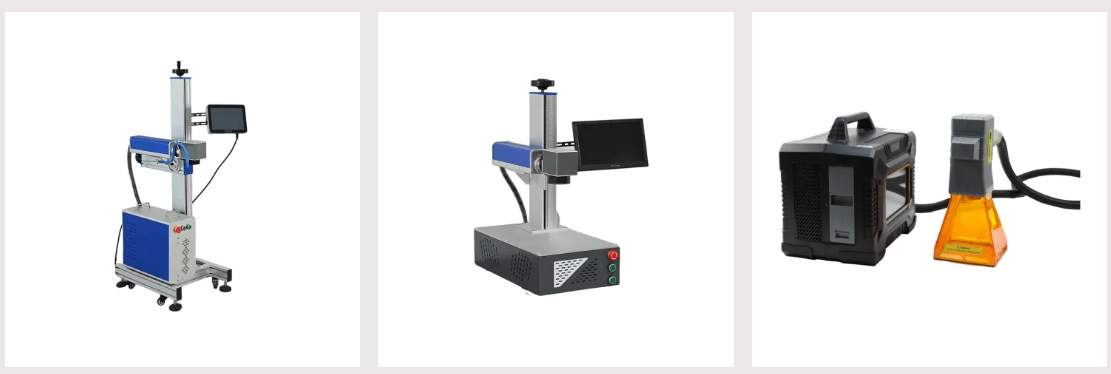
Then, consider your part size. Small parts can be marked on a desktop system. Large parts may need a handheld or portable system. For production lines, a benchtop or flying laser marking machine may be a better fit.
Also, think about daily output. If you mark parts all day, choose a machine built for stable long-term work. Yuanshida offers fiber laser marking options with different formats, including desktop, portable, handheld, and benchtop models for different production needs.
Key Benefits for B2B Buyers
Fiber laser marking offers several clear benefits for industrial buyers.
First, it creates permanent marks without ink or labels. This helps lower consumable costs.
Second, it gives high marking accuracy. Small text, QR codes, and fine logos can be marked clearly.
Third, it supports many metals. This makes one machine useful for many jobs.
Fourth, it is easy to repeat. Once the right settings are saved, operators can mark the same part again and again with stable results.
Finally, it can improve product traceability. This is very important for auto parts, tools, machinery parts, and other metal components.
Why Choose Yuanshida?
Yuanshida focuses on industrial laser marking equipment and global export. Its product range includes handheld, desktop, tabletop, portable, and benchtop laser marking machines. These machines are used in hardware, auto parts, pipes, profiles, electronics, jewelry, machinery parts, gifts, crafts, and other industries.
For metal marking, Yuanshida provides practical fiber laser marking machine options for different work sites. Whether you need a compact desktop unit, a portable machine for large parts, or a benchtop model for production work, Yuanshida can help match the machine to your material and marking task.
Final Thoughts
Fiber laser marking is a smart choice for metal parts, tools, and automotive components. It gives clear, permanent, and repeatable marks without ink or labels.
If your factory needs auto parts laser marking, tool branding, part codes, or serial number marking, a fiber laser marking machine for metal can improve both product quality and traceability.
Before ordering, prepare your sample parts and marking files. Then test the mark quality, speed, depth, and contrast. With the right Yuanshida machine, your production line can mark faster, cleaner, and with more confidence.


