Laser Rust Removal
News Details
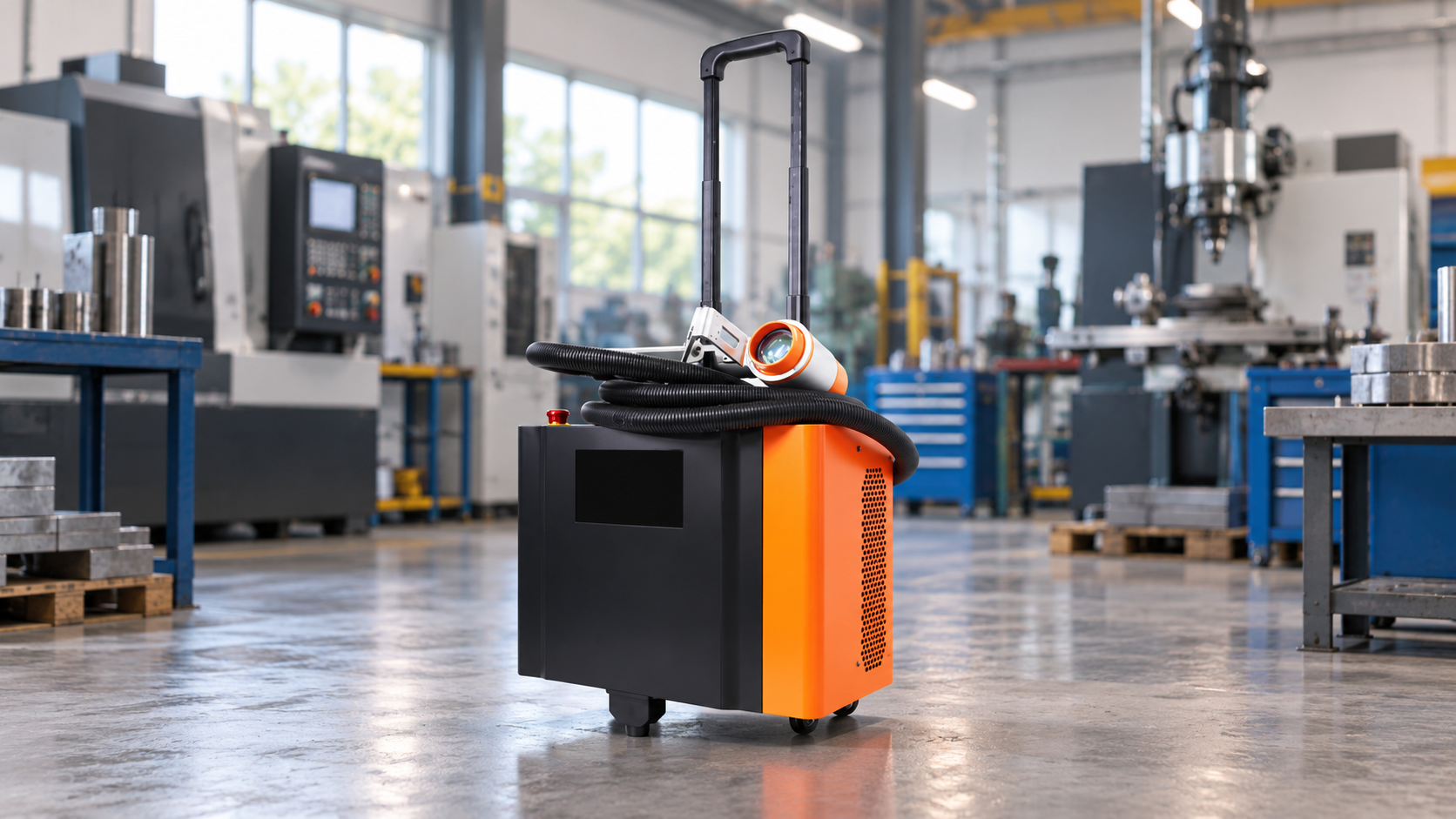
Surface cleaning can directly affect weld quality, coating adhesion and repair outcomes. Grinding, brushing and chemical cleaning often add time, consumables and limitations when only a small area needs treatment.
Laser cleaning uses a scanned beam to remove unwanted surface layers, including rust, paint, oil and oxides. With correct process settings, it can clean a selected area while limiting changes to the underlying metal.
For manufacturers and industrial buyers, the practical question is whether the process can achieve the required finish at an acceptable cost per part. This guide covers what to review before discussing a project with Yuanshida.
How Does Laser Cleaning Work?
Laser cleaning directs focused light onto a surface. The unwanted layer absorbs energy and breaks down or separates from the base material while the beam scans across the selected area.
The result depends on process control. Laser power, pulse parameters, focus position, scan speed and overlap all influence how much material is removed. Excess energy can alter the base surface, while insufficient energy may leave residue.
Access also matters. The beam must reach the area being cleaned, so deep holes and hidden surfaces can be difficult to treat.
For this reason, testing on the actual component is more reliable than evaluating a general cleaning demonstration.
Weld Cleaning Laser: Preparing and Finishing Weld Seams
A weld cleaning laser can be used before welding to prepare the joint and after welding to remove discoloration. These are different applications and may require different process parameters.
Before welding, the objective is to remove oil, rust, paint or oxides from the joint area. These contaminants can enter the weld pool and reduce weld quality. Targeted cleaning allows the joint to be prepared without treating the entire component.
After welding, the process may target surface oxides or heat tint around the seam. However, visual brightness alone does not confirm that the weld meets structural or quality requirements.
A useful trial should define the following:
- Metal grade and material thickness.
- Seam width and geometry.
- Whether cleaning occurs before or after welding.
- Allowed change in surface texture.
- Subsequent process, such as inspection, painting or assembly.
This allows the test to focus on production requirements rather than appearance alone.
Paint Removal Laser: Cleaning Selected Areas
A paint removal laser is suitable when only part of a coating requires removal. For example, a manufacturer may need a bare metal strip before welding or a clean contact area before assembly.
Unlike processes that treat the full component, laser stripping can follow a defined path. Under suitable process settings, selected areas can be exposed while adjacent coating remains intact.
Paint systems vary significantly. A thin single-coat surface and a thick multilayer coating cannot be expected to clean at the same rate.
Before testing, identify the coating type, thickness and substrate material. Also state whether complete removal or selective layer removal is required. This establishes a clear acceptance criterion.
Laser Cleaning for Oil and Grease
Oil and grease residues may remain on components after machining, forming or storage. These films can interfere with subsequent joining or coating operations.
Laser cleaning can remove suitable oil and grease residues from accessible surfaces and can be directed to a narrow work area, such as a joint or bonding zone.
However, the quantity and type of oil influence process performance. A light film and a heavy deposit require different cleaning approaches. Buyers should provide the lubricant specification, sample parts and the required cleanliness level.
The trial should evaluate both residual film and visible surface condition. This ensures the cleaning result is judged against the next production requirement.
Oxide Cleaning for Metal Parts
Oxide cleaning includes several applications. Rust on steel, heat oxides near welds and oxide layers on other metals have different properties, so a single parameter set will not suit every case.
A controlled laser process can remove unwanted oxide layers and prepare a surface for subsequent operations. The objective should be defined before cleaning begins, whether for improved appearance, joining preparation or surface preparation before coating.
For purchasing teams, consistency across multiple parts is more important than one polished sample. Testing should cover the range of surface conditions encountered in normal production.
Laser Cleaning for Rust and Paint: What Affects Results?
When comparing laser cleaning for rust and paint, rated power alone is not enough. The complete process determines cleaning speed, surface finish and operating cost.
| Factor | Why it matters |
|---|---|
| Layer thickness | Thick or uneven coatings may require multiple passes. |
| Base material | Thin or heat-sensitive materials require precise control. |
| Part geometry | Corners, curves and edges affect beam access. |
| Cleaning width | A wider scan must still deliver sufficient energy to remove the layer. |
| Required finish | Visual cleaning and bonding preparation may require different acceptance checks. |
| Daily output | Loading, handling and inspection influence overall productivity. |
It is also important to understand how the cleaning area is controlled. A small repair zone and a large steel panel may require different equipment and handling methods.
How Does Laser Cleaning Compare with Other Methods?
Laser cleaning can reduce reliance on blasting media or chemical stripping agents. Its focused beam is particularly suitable for applications where only a defined area requires treatment.
However, it does not replace every cleaning method. Chemical cleaning, for example, can reach surfaces that a laser beam cannot access.
An accurate cost comparison should include more than equipment price. Labor, consumables, component handling, extraction systems, maintenance and inspection all contribute to total operating cost. The relevant comparison is total cost per accepted part.
This provides a stronger basis for buyers when evaluating investment.
What Should B2B Buyers Request Before Ordering?
Begin with a concise application brief. Include photographs, drawings, material details and target output per shift. Then arrange a sample trial with clear pass/fail criteria.
Request the following:
- Before-and-after photographs of the same area.
- Cleaning time, including repeat passes.
- Tested machine configuration and process settings.
- Residue and surface change inspection results.
- Installation, extraction and operator training requirements.
- Warranty terms, spare parts availability and service support.
Confirm the complete workstation setup. Laser cleaning generates removed material that must be collected, so extraction should be included in the process evaluation.
Discuss Your Laser Cleaning Project with Yuanshida
Whether the application involves weld seams, paint, oil or oxides, begin with the component and the required outcome. A clearly defined trial helps convert a general equipment inquiry into a practical purchasing decision.
Explore the Yuanshida website and product range. Share your material, surface condition, cleaning area and daily output with Yuanshida to discuss equipment suitability and sample testing.
With clear requirements and measured trial results, your team can evaluate laser cleaning with greater confidence.


