Laser Marking Machine Safety: Enclosures, Interlocks and PPE
News Details
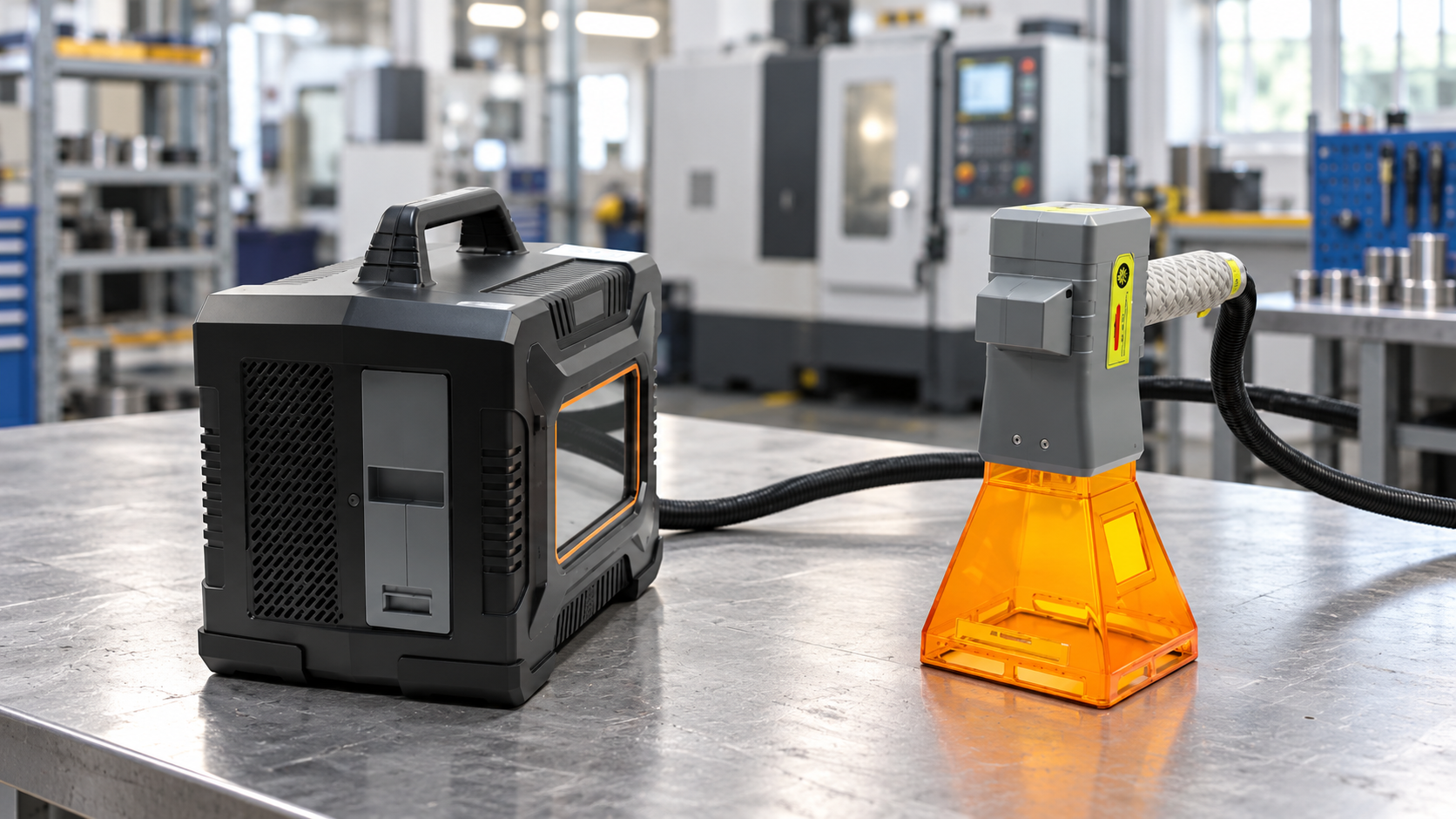
A clear mark helps identify a product. A safe marking station helps protect the people who make it. For manufacturers, both should be part of the buying decision.
Laser marking machine safety involves more than a pair of protective glasses. Buyers need to assess beam access, machine guards, door controls, fumes and daily work methods. In addition, the setup must suit the parts, materials and production flow.
When discussing a marking project with Yuanshida, start with the complete workstation. This helps your team define safety needs before installation and avoid changes later.
Understand Class 4 Laser Safety
Class 4 lasers can cause serious eye and skin injuries through direct or reflected beams. They may also create fire hazards. Therefore, an exposed beam needs controls that match the actual risk.
However, the laser source class and the complete machine class are not always the same. A high-power source can sit inside a protective system that limits accessible radiation and allows a lower classification during normal use.
As a buyer, ask for the classification of the finished machine in its supplied form. Also, confirm what changes during setup, maintenance and service.
An open marking station and a fully enclosed station may need very different site controls, even when they use a similar source.
Choose a Laser Enclosure That Fits the Application
A laser enclosure helps contain hazardous radiation around the beam path and marking area. Its design should account for the parts being marked, possible reflections and every access point.
For example, a cabinet may work well for small metal parts. Yet long tubes, large panels or conveyor-fed products may need a different guarding layout.
During your design review, ask about:
- Door gaps, joints and loading openings.
- Cable routes and extraction ports.
- Viewing windows and their protective ratings.
- Clearance for fixtures and rotary devices.
- Containment when marking reflective or curved parts.
The enclosure should protect people during the intended process. Simply adding walls around a machine does not establish its safety classification.
Also, consider daily use. If loading is awkward, staff may be tempted to work around the guards. A practical layout supports both safe work and steady output.
Check How Door Interlocks Work
An interlock links an access door or panel to the laser safety system. When a protected access point opens, the system should prevent hazardous exposure, such as by stopping emission or closing a beam shutter.
Safety design must also address faults. Depending on the applicable requirements, redundant controls or safe-failure measures may be needed. FDA guidance specifically discusses these measures for interlocks protecting against access to high-hazard radiation.
Before accepting a machine, request a documented demonstration of:
- The response when each protected door opens.
- The response to an interlock fault.
- The reset and restart sequence.
- The emergency stop function.
- Any service mode and its access controls.
Never bypass an interlock to speed up loading. Instead, review the fixture, door design or cycle sequence with the supplier.
Select PPE for the Actual Laser
Personal protective equipment, or PPE, supports the safety plan. Engineering controls should come first.
When laser eyewear is needed, it must match the laser wavelength and provide suitable protection for the exposure. Optical density, often called OD, describes how much light the eyewear blocks at specified wavelengths.
Therefore, lens color or the words “laser glasses” are not enough. Selection should account for the wavelength, output, pulse characteristics and relevant protective rating. OSHA guidance also calls for eyewear to be clearly marked with its wavelength coverage and OD.
For a properly classified enclosed system, normal operation may have different PPE needs from service work. A qualified laser safety professional should define those needs for each task.
Likewise, gloves and clothing should suit the risks identified in the assessment. They do not make direct beam exposure acceptable.
Include Fume Extraction in the Workstation Plan
Laser marking can produce airborne material as the beam interacts with a part or coating. The hazard depends on what is being processed, so the material review should include paint, plating, oil and other surface layers.
OSHA guidance identifies ventilation as a control for hazardous fumes and vapors from laser-material interactions.
Plan fume extraction around the actual marking process. Ask where the capture point will sit and how airflow will be checked. Also, confirm filter selection, discharge arrangements and maintenance needs with a competent ventilation specialist.
Before production, provide:
- Base material and coating details.
- Safety data sheets where available.
- Marking settings and cycle time.
- Expected parts per shift.
- Details of any planned air recirculation.
A clear view of the mark does not prove that airborne exposure is controlled. Similarly, an enclosure designed for beam containment does not automatically provide effective fume capture.
Plan for Open Stations and Large Parts
Some applications cannot fit inside a standard cabinet. In these cases, Class 4 laser safety needs careful attention to the wider work area.
A qualified assessment should define the controlled area, access limits, barriers and warning systems. It should also address reflected beams and nearby workstations. OSHA guidance calls for controlled access and suitable beam-path controls where high-hazard beams remain unenclosed.
As a result, the lowest machine price may not mean the lowest installed cost. Include guarding, extraction, training and site changes when comparing options.
Train Operators for Routine Work and Faults
Good controls need clear work instructions. Operators should know how to load parts, select approved jobs and respond when something goes wrong.
Training should cover startup checks, approved materials, fixture use, extraction and emergency actions. In addition, explain which tasks require trained service staff.
Keep the instructions close to the machine. Use short steps and clear photos where helpful. Then update them when a new part, material or process changes the risk.
For maintenance, follow the manufacturer’s isolation procedure and the site’s energy-control rules. Opening a housing can expose hazards that are contained during normal production.
What Should Buyers Ask Yuanshida Before Ordering?
A useful inquiry includes more than marking depth and speed. Share your largest part size, material range, loading method and target output with Yuanshida.
Then use the following points to review the proposed configuration:
| Review item | What to confirm |
|---|---|
| Machine classification | Classification of the complete supplied system |
| Laser enclosure | Suitability for parts, openings and reflections |
| Interlocks | Safety response, fault handling and restart behavior |
| PPE | Task-specific selection and supporting information |
| Fume extraction | Capture design, filtration and maintenance |
| Documentation | Manuals, labels and applicable conformity records |
| Training and service | Operator training, service access and support scope |
Request confirmation for the exact model and options being quoted. Safety features can vary by configuration, so general product descriptions should not replace a detailed review.
Build Safety into Your Marking Project
Effective laser marking machine safety starts before the machine reaches the factory. A suitable enclosure, reliable interlocks, assessed PPE and effective fume extraction all contribute to a practical workstation.
Explore the Yuanshida website and product range. Then discuss your parts, materials and site requirements with Yuanshida to define the proposed setup and the safety documentation needed for your project.


