355nm UV Laser Marking: Where Cold Processing Makes a Difference
News Details
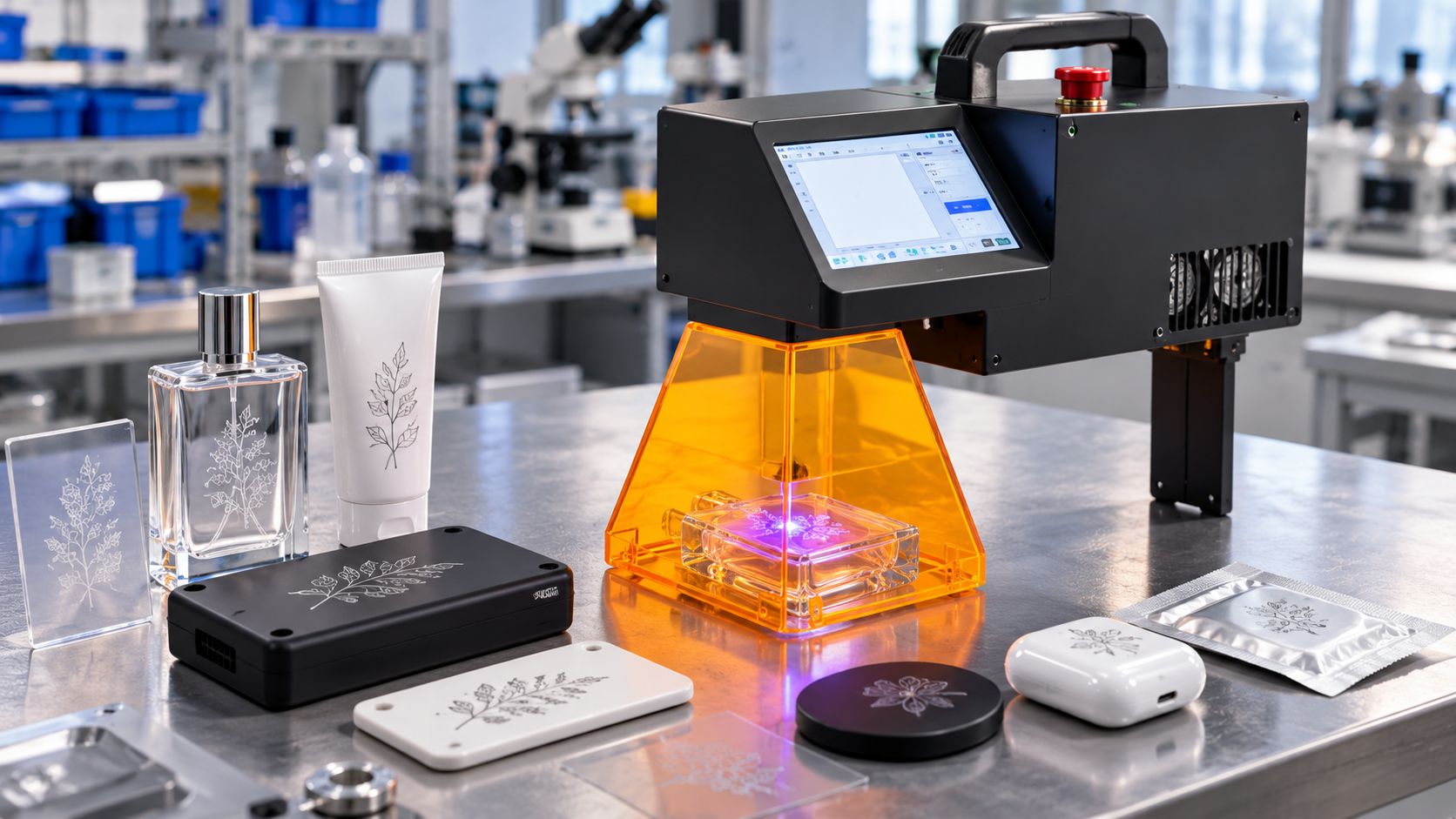
Certain products are difficult to mark. Heat may burn the surface, melt the edge, alter the color, or distort the component. This is typical for plastics, glass, ceramics, films, medical packaging, electronic components, and other delicate materials.
For such tasks, a 355nm UV laser marking machine may be a superior option. It utilizes short-wavelength UV light to produce precise and clean marks with minimal thermal effect. This process is frequently referred to as cold laser marking.
Yuanshida offers industrial laser marking equipment for international customers, encompassing desktop, benchtop, handheld, portable, fiber, UV, CO₂, and laser cleaning systems. Its UV laser engraving options are tailored for high-precision marking on sensitive materials.
What is 355nm UV Laser Marking?
355nm UV laser marking utilizes an ultraviolet laser source. The reduced wavelength enables the laser to focus on an extremely small point. Consequently, it can produce fine lines, minute text, legible codes, and high-contrast markings.
In contrast to numerous heat-based marking techniques, UV marking minimizes thermal stress on the surface. As a result, it can mark delicate materials while helping to prevent burning, swelling, and edge damage.
This makes it useful when the final mark needs to be both small and clean.
Why Cold Laser Marking Matters
Cold laser marking is significant as numerous products cannot endure excessive heat. If the laser generates too much thermal impact, the product may crack, yellow, warp, or lose surface quality.
For example, plastic packaging may melt. Glass may exhibit rough edges. Ceramic surfaces may require a fine mark without cracks. Electronic housings may require small codes without causing damage to adjacent regions.
A 355nm UV laser marking machine helps solve these problems. It marks with better control and less surface stress. Consequently, it is frequently utilized when quality takes precedence over deep engraving.
Best Materials for UV Laser Marking
A UV laser engraver can mark a wide range of materials. It is particularly well-suited for plastics, glass, ceramics, coated materials, films, labels, cosmetic packaging, medical packaging, and electronic components.
It can also mark certain metals, contingent upon the surface and desired effect. Nevertheless, for deep metal engraving, fiber laser marking is often a more appropriate choice.
In short, UV is the right option when the surface is sensitive, the mark is small, or the product needs a clean finish.
Common Industrial Applications
A precision marking machine is utilized across numerous B2B industries.
In electronics, it can mark plastic housings, circuit-related components, connectors, and small parts. In medical and pharmaceutical packaging, it can mark batch codes, date codes, and traceability codes. In cosmetics, it can mark bottles, caps, tubes, labels, and outer boxes.
It is also employed for glass products, ceramic components, food packaging, cables, pipes, films, and high-value plastic parts. Because the mark is precise, UV laser marking is a strong choice for QR codes, barcodes, serial numbers, logos, and small text.
Desktop UV Laser Marking Machine
For workshops, labs, sample rooms, and small-batch production, a desktop UV laser marking machine is practical. It has a compact footprint and can fit on a workbench.
Yuanshida’s desktop UV laser marking machine uses a 355nm UV laser source. It is designed for high-precision, ultra-fine industrial identification. It can support delicate, high-contrast marks on glass, plastics, ceramics, and various metals while reducing heat impact on the surrounding surface.
This format is useful when buyers need flexible marking, easy setup, and stable results for many product types.
Benchtop and Flying UV Options
For higher output or conveyor lines, a benchtop UV laser marking system may be a better choice. It can support more stable production, fixtures, sensors, and line use.
Yuanshida also offers a benchtop flying UV laser marking machine with 3W, 5W, and 10W options. It utilizes a 355nm UV cold laser, flying bracket, line speed support, and smart inline detection for industrial coding.
This is useful for packaging lines, bottle lines, electronic product lines, and other moving production systems. Products can be marked while they move, which helps improve speed and reduce manual handling.
UV vs. Fiber vs. CO₂ Laser Marking
Each laser type has its own best use.
Fiber laser marking is often used for metals and many hard plastics. It is suitable for tools, automotive parts, metal tags, and industrial components.
CO₂ laser marking is often used for non-metal materials, such as wood, paper, cardboard, leather, rubber, acrylic, glass, and packaging materials.
UV laser marking is optimal when the material is sensitive, the code is small, or the mark requires high detail with minimal heat. Consequently, UV is frequently selected for fine plastics, glass, ceramics, films, cosmetics packaging, medical packaging, and electronics.
How to Choose a355nm UV Laser Marking Machine
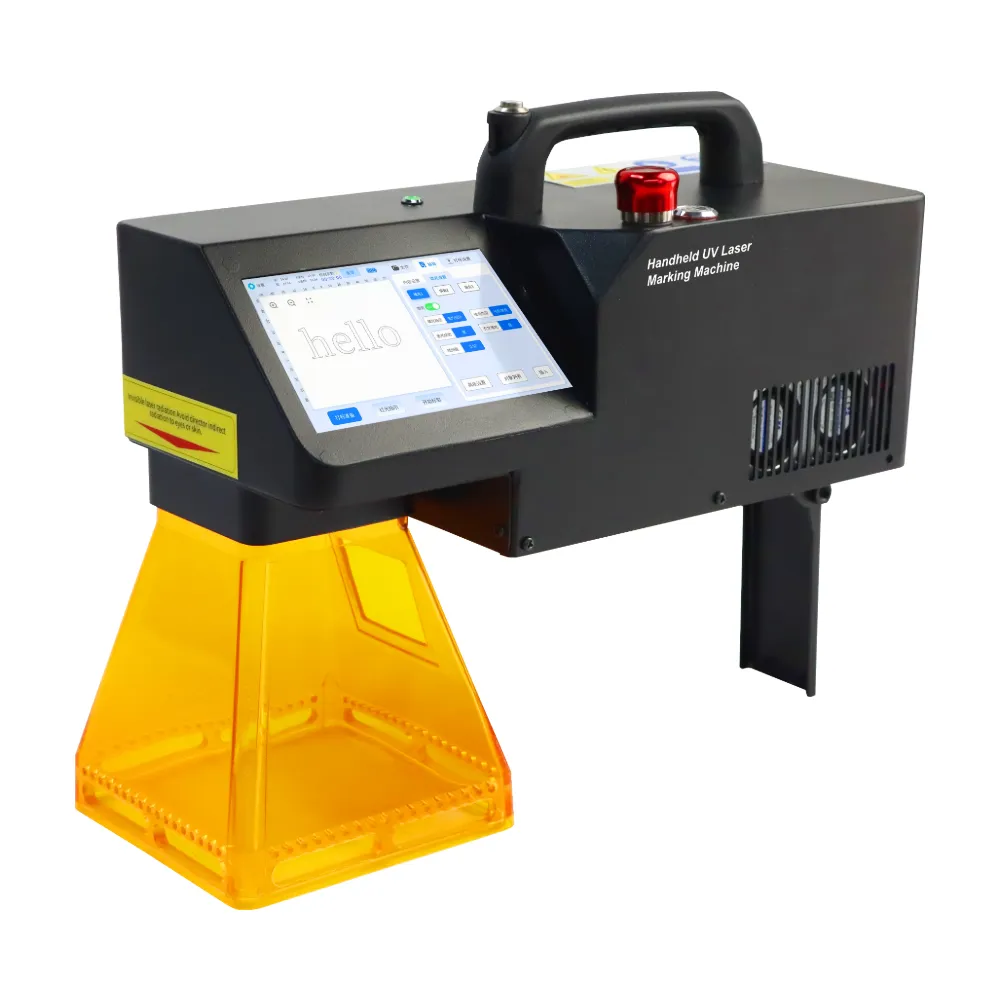
Prior to making a purchase, begin by assessing your material. Submit genuine samples if feasible, as plastics, coatings, and glass may exhibit varied reactions.
Next, check the mark content. If you need tiny text, QR codes, barcodes, or detailed logos, choose a machine with stable focus and high precision.
Then, consider production speed. For small batches, a desktop UV laser engraver may be sufficient. For moving lines, a benchtop flying UV system may be more suitable.
Also, review the marking area. Small components may require a standard field, while larger products may need a wider lens or custom fixture.
Finally, inquire about software, cooling, training, spare parts, and after-sales support. These details can affect daily use and long-term stability.
Key Questions Before Ordering
Before choosing a UV marking system, ask these questions:
What material will we mark?
Is the product heat-sensitive?
Do we need cold laser marking or deep engraving?
What code size and contrast do we need?
Will the part be marked offline or on a conveyor line?
Do we need a desktop, benchtop, handheld, or flying system?
Can the supplier test our samples?
What power level is suitable for our application?
What training and service are included?
These questions help you select a machine that fits your real production needs.
Why ChooseYuanshida?
Yuanshida is a high-tech enterprise specializing in the research, development, manufacturing, and global export of industrial laser marking equipment. Its product range includes handheld, desktop, tabletop, benchtop, fiber, UV, CO₂, and laser cleaning systems.
Yuanshida’s UV laser marking machines are engineered for precise, low-heat marking on sensitive materials. Whether you require a compact UV laser engraver for a workshop or a flying UV marker for a conveyor line, Yuanshida can assist in matching the appropriate machine to your product, material, and output requirements.
Final Thoughts
A 355nm UV laser marking machine is the right choice when cold processing matters. It can create fine, clean, and durable marks on sensitive materials with less heat impact.
For plastics, glass, ceramics, films, medical packaging, cosmetics packaging, and electronic parts, UV laser marking can improve quality and reduce surface damage.
Before ordering, test your real samples and confirm mark clarity, contrast, speed, and surface finish. With the right Yuanshida precision marking machine, your production process can become cleaner, more stable, and easier to control.


