Desktop Flying Laser Marking Machines for Conveyor Lines
News Details
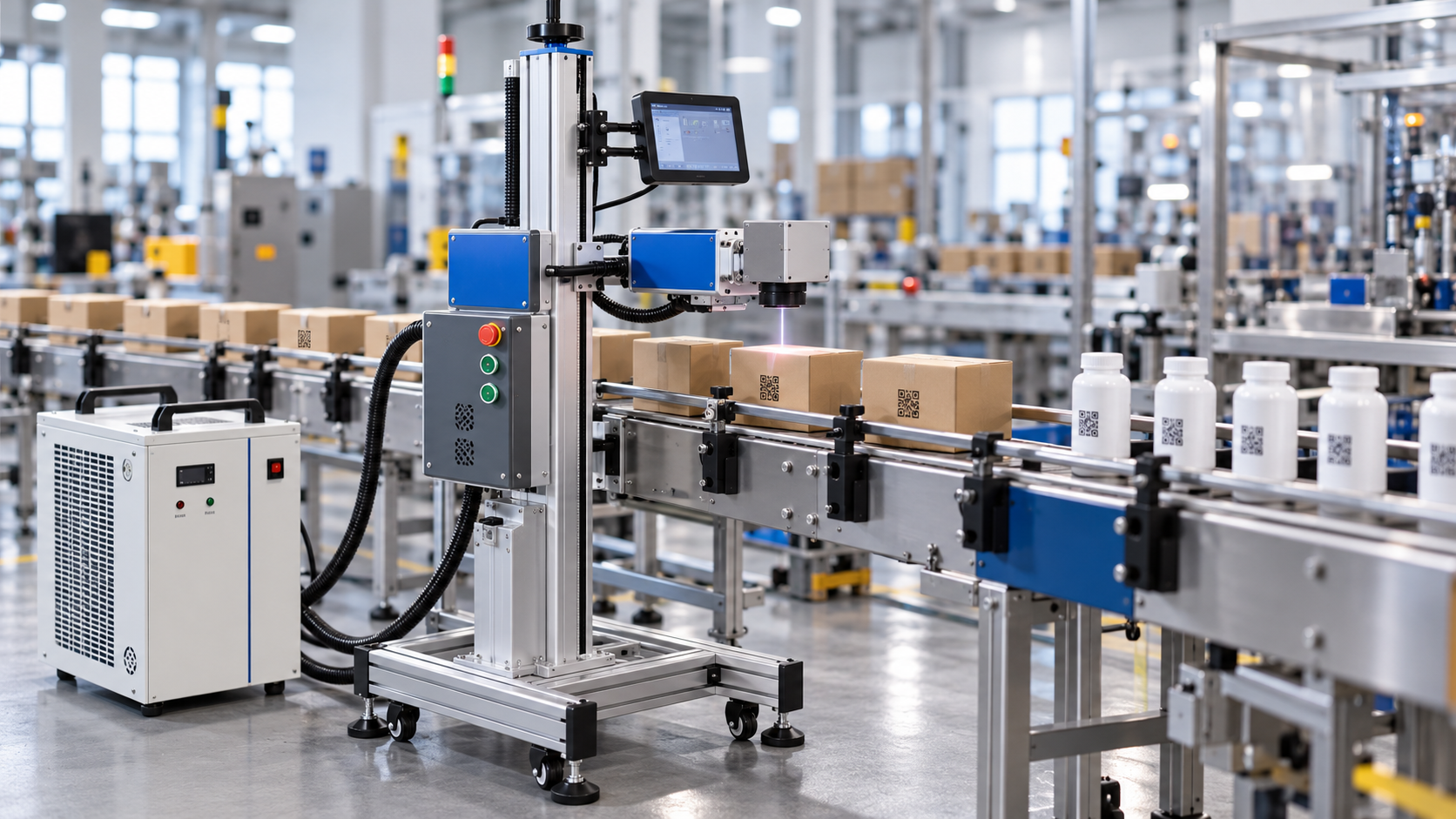
Fast production lines require efficient, stable marking solutions. In many factories, products move on conveyors throughout the day. They may need date codes, batch numbers, QR codes, barcodes, logos, or traceability data. If the marking system is too slow, the entire line can lose efficiency.
A benchtop laser marking machine can solve this problem. It can be installed beside or above a conveyor line to mark products as they move. This process is commonly known as flying marking. It enables factories to code products without stopping the line.
Yuanshida provides industrial laser marking equipment for global buyers, including handheld, desktop, benchtop, fiber, UV, and CO₂ laser marking machines, as well as laser cleaning machines. For conveyor lines, Yuanshida offers benchtop flying CO₂ and UV laser marking options tailored to different materials and production needs.
What is a benchtop flying laser marking machine?
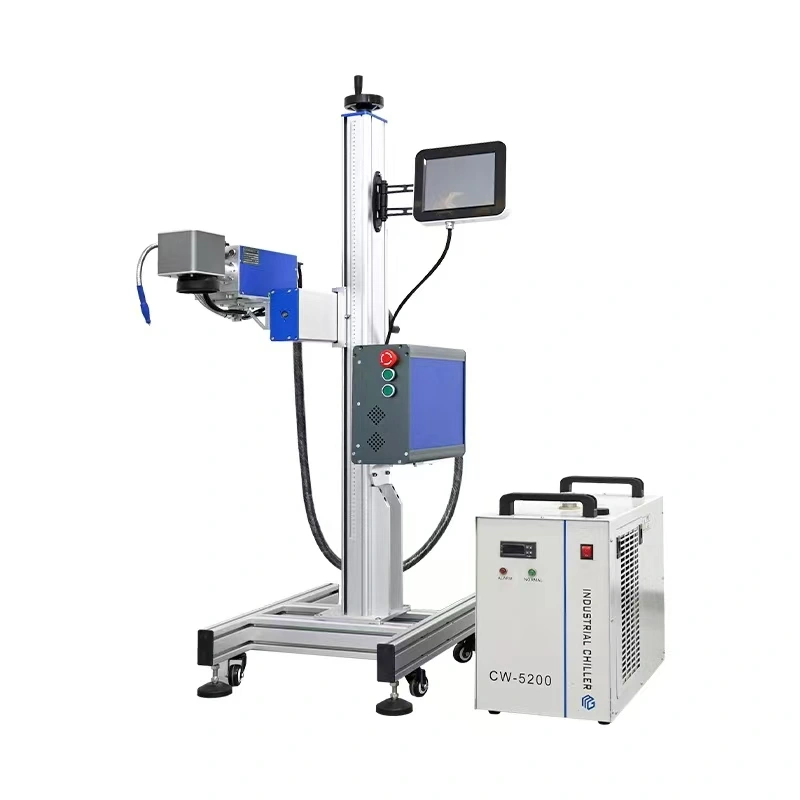
A benchtop flying laser marking machine is a compact industrial system used for dynamic marking on moving products. Instead of manually placing each item under the laser, products move along a conveyor line, and the laser marks them at the precise moment.
This system typically includes a laser source, marking head, flying bracket, control software, sensor, and conveyor support. With the proper setup, it can clearly mark codes while products remain in motion.
This format is ideal for factories that require high speed, repeatability, and reduced labor input. Additionally, it can decrease the use of ink, labels, and other consumables.
Why do conveyor lines need flying marking?
In many production lines, stopping each item for marking is impractical. It slows down the process and increases handling time. Therefore, conveyor laser engraving is a more suitable option for continuous production.
Flying laser marking helps keep the line running smoothly. It can mark products as they pass under the laser head. As a result, factories can increase output while maintaining consistent code quality.
Furthermore, laser marking creates permanent marks. Compared to inkjet coding, labels, or ribbons, it reduces smudging, fading, peeling, and ongoing consumable costs.
Flying CO2 marker for packaging and non-metals
A flying CO2 marker is commonly used for non-metal materials. It can mark paper, cardboard, wood, leather, rubber, glass, acrylic, plastic packaging, cartons, bottles, and labels.
This makes it an excellent choice for food, beverage, pharmaceutical, cosmetic, daily goods, packaging, and light industrial production lines. For instance, it can mark date codes on cartons, batch numbers on paper boxes, or QR codes on packaging films.
Yuanshida’s benchtop flying CO₂ laser marking machine is designed for dynamic marking on assembly lines and high-speed marking on wood, plastic, and non-metal materials. It is a practical solution for factories that require clean, fast, and consumable-free coding.
Flying UV marker for fine and sensitive materials
A flying UV marker is used when products require fine marking and minimal heat impact. UV laser marking is often referred to as cold processing because it generates less heat on the surface.
This makes it suitable for plastics, glass, ceramics, electronic components, medical packaging, cosmetic packaging, and other sensitive materials. It can produce sharp, high-contrast marks without causing significant burning or deformation.
Yuanshida’s benchtop flying UV laser marking machine utilizes a 355nm UV laser. It is available in 3W, 5W, and 10W options, equipped with a flying bracket, line speed support, and intelligent inline detection for industrial coding. This makes it ideal for precise marks on high-speed production lines.
Common applications for conveyor laser engraving
Benchtop flying laser systems can be used in various B2B applications.
In packaging lines, they can mark paper boxes, cartons, bottle caps, plastic films, labels, and pouches. In food and beverage lines, they can mark date codes and batch numbers. In the cosmetics industry, they can mark glass bottles, plastic tubes, and outer packaging boxes.
In the electronics sector, UV laser marking can be used on plastic enclosures, small components, and packaging. In building materials and hardware industries, CO₂ or fiber laser systems can mark profiles, pipes, wooden parts, and certain coated surfaces.
Since each material responds differently, sample testing is essential before bulk production.
Benchtop vs. desktop marking systems
Desktop laser marking machines are typically used for small batches, samples, workshops, and offline marking. The operator places the part under the laser and initiates the process.
A benchtop laser marking machine is more suitable when the process requires greater stability, repetitive operations, or integration with production lines. It can be installed near a conveyor and connected with sensors or fixtures.
Therefore, if you mark a mixture of small orders, a desktop model may suffice. However, if you need continuous coding on moving products, a benchtop flying system is usually a better choice.
Key benefits for production lines
First, flying laser marking helps maintain continuous production. Products do not need to stop for coding, allowing the line to run more efficiently.
Second, it reduces consumables. There is no need for ink, solvents, ribbons, or label materials during the marking process, which can lower daily operating costs.
Third, the marks are clear and durable. They can include dates, batch numbers, serial numbers, QR codes, barcodes, and simple logos.
In addition, the process is clean. This is beneficial for packaging, food, beverage, cosmetics, and medical-related production.
Finally, laser marking can support traceability. By incorporating variable codes and batch data, each product or package can carry valuable production information.
How to choose the right system
Before purchasing, start with your materials. If you are marking cartons, wood, paper, leather, or various non-metals, a flying CO2 marker may be a suitable choice. If you are marking glass, fine plastics, or sensitive packaging, a flying UV marker may be more appropriate.
Next, consider line speed. Your marking system must match the conveyor speed, product spacing, and code size. If the code is large or detailed, it may require more marking time.
Then, review the marking content. Date codes are straightforward. QR codes, barcodes, and detailed logos require better focus, stable movement, and clear contrast.
Also, consider installation space. A benchtop system requires sufficient room for the laser head, bracket, sensor, controller, and product path.
Finally, inquire about software, data input, sensors, training, spare parts, and after-sales support. These factors affect daily use and long-term stability.
Questions to ask before ordering
Before selecting a benchtop laser marking machine, consider the following questions:
What materials will be marked?
What is the conveyor speed?
What are the product dimensions and spacing?
Do you need to mark date codes, batch numbers, QR codes, or barcodes?
Will the code change for each product or each batch?
Is the surface flat, curved, glossy, or transparent?
Do you need CO₂, UV, or fiber laser marking?
Can the supplier test with your actual samples?
What safety measures are required for the line?
What services and training are included?
These questions help clarify project requirements before the machine is manufactured or shipped.
Why choose Yuanshida?
Yuanshida is a high-tech enterprise specializing in the research, development, production, and export of industrial laser marking equipment. Its machines are widely used in hardware, auto parts, pipes, profiles, electronic components, jewelry, mechanical spare parts, gifts, crafts, packaging, and other industries.
For conveyor lines, Yuanshida offers benchtop flying CO₂ and UV laser marking machines. Its product range also includes benchtop fiber, desktop fiber, desktop UV, desktop CO₂, handheld, portable, and laser cleaning machines.
Conclusion
A benchtop flying laser marking machine is an excellent choice for conveyor lines that require fast, clean, and stable coding. It enables factories to mark products while in motion, reduce consumables, and enhance traceability.
Choose a flying CO2 marker for most packaging and non-metal materials. Select a flying UV marker for fine marking on glass, plastics, and sensitive surfaces. For optimal results, test your actual samples and confirm speed, contrast, and code readability before placing an order.
With the right Yuanshida system, your conveyor line can mark products faster, more cleanly, and with greater precision.


