Fiber, CO₂ or UV Laser Marking: A B2B Material Selection Guide
News Details
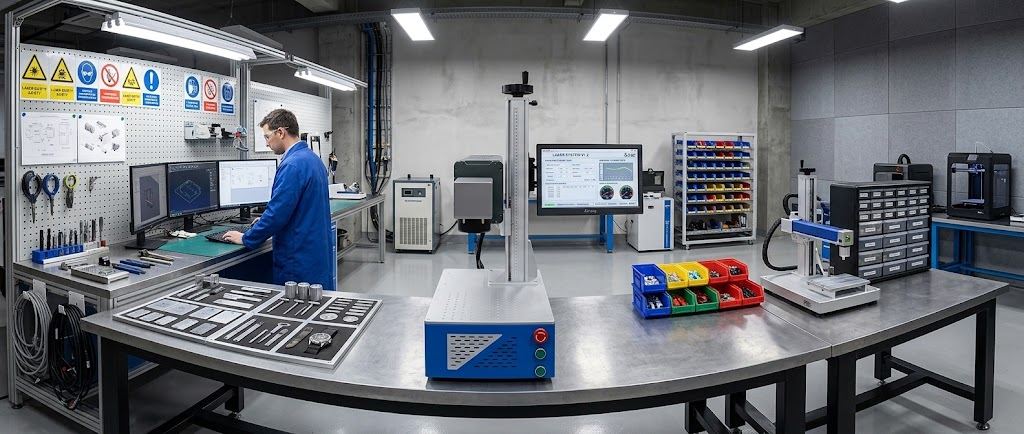
Choosing the right laser marking machine starts with one basic question: What material do you need to mark?
Fiber, CO₂, and UV lasers use different wavelengths and work best on different materials. Therefore, choosing a machine based only on laser power can lead to poor mark quality, slow production, or unnecessary costs.
For B2B buyers, the better approach is to match the laser source with the material, marking depth, required contrast, production speed, and surface sensitivity.
Yuanshida supplies fiber, CO₂, and UV laser marking machines for industrial applications, including equipment for metal parts, plastics, glass, packaging, electronic components, pipes, profiles, and other materials.
Fiber Laser for Metal: The Standard Choice for Industrial Metals
A fiber laser is usually the first choice when the main job is marking metal.
A typical fiber laser uses a wavelength around 1064 nm. It works well with materials such as stainless steel, carbon steel, aluminum, brass, copper, and many other metals.
A fiber laser for metal can create permanent marks such as:
- Serial numbers
- Part numbers
- Logos
- QR codes
- Barcodes
- Product specifications
- Identification codes
- Traceability marks
Fiber laser marking is widely used for hardware, automotive parts, machinery, electronic components, and other industrial products.
For example, Yuanshida offers desktop and benchtop fiber laser marking machines, with available models covering different industrial production needs. Its benchtop fiber series includes 20W to 50W configurations and is designed for continuous industrial operation.
When Should You Choose a Fiber Laser?
A fiber laser is a good fit when:
- Most workpieces are metal.
- You need permanent and clear identification.
- Parts require serial numbers or traceability codes.
- Marking speed is important.
- The production line runs for long periods.
- You need a reliable solution for repeated metal marking.
For most metal marking applications, fiber is the practical starting point.
CO₂ Laserfor Non-Metal: A Better Fit for Organic Materials
A CO₂ laser operates at a much longer wavelength than a fiber laser. Because of this, it interacts differently with materials.
A CO2 laser for non-metal applications is commonly used for materials such as:
- Wood
- Cardboard
- Paper
- Leather
- Acrylic
- Rubber
- Certain plastics
- Packaging materials
CO₂ lasers are particularly useful when manufacturers need to add text, logos, codes, or other information to non-metal surfaces.
For example, Yuanshida's CO₂ laser marking range includes desktop and flying marking systems. Its flying CO₂ machine is designed for high-speed marking of materials such as wood, plastic, and other non-metals, including dynamic production-line applications.
When Should You Choose a CO₂ Laser?
Choose a CO₂ laser when:
- Your main materials are non-metal.
- You mark packaging or organic materials.
- Wood, paper, cardboard, or leather is part of your product range.
- You need inline marking on a production line.
- A fiber laser does not produce the required result on your material.
However, material composition still matters. Some plastics respond well to CO₂ wavelengths, while others may require UV or a different laser source.
Therefore, testing the actual material before purchase is important.
355nm UV Marking: For Fine and Sensitive Materials
UV laser marking uses a much shorter wavelength. A common industrial wavelength is 355nm UV marking.
The shorter wavelength allows the laser to interact with materials in a different way. UV marking is often selected for fine, high-contrast marks where excessive heat could damage the workpiece.
It can be suitable for materials such as:
- Plastics
- Glass
- Ceramics
- Electronic components
- Films
- Coated materials
- Sensitive metal surfaces
- Other delicate substrates
Yuanshida's UV laser marking machines use a 355nm laser source. Its desktop UV system is designed for fine industrial identification on plastics, glass, ceramics, and various metals, while its portable UV model is designed for compact, high-precision marking.
Why Is 355nm UV Marking Different?
The main advantage is not simply the wavelength itself. It is how the laser interacts with the surface.
UV marking can help reduce unwanted thermal effects compared with some longer-wavelength processes. This makes it useful when the appearance and condition of the surrounding surface are important.
For electronics, packaging, plastics, and other sensitive products, this can be a major consideration.
Fiber CO₂ UV Laser Marking: How Do They Compare?
The easiest way to compare the three technologies is by looking at their typical material applications.
| Laser Type | Typical Wavelength | Best-Suited Materials | Common Applications |
|---|---|---|---|
| Fiber | Around 1064nm | Metals | Metal parts, tools, automotive components, hardware |
| CO₂ | Around 10.6μm | Non-metals | Wood, cardboard, leather, packaging, plastics |
| UV | 355nm | Sensitive and fine-detail materials | Plastics, glass, electronics, ceramics, fine marking |
This table is a general guide. The best laser can still vary according to the exact material, surface treatment, color, thickness, and marking requirement.
Fiber vs CO₂ vs UV: Which Laser Should You Buy?
The choice becomes easier when you start with your main material.
Choose Fiber for Metal
If your factory mainly marks stainless steel, aluminum, carbon steel, brass, or other metal parts, fiber is usually the most suitable option.
It is particularly useful for industrial identification and traceability.
Choose CO₂ for Non-Metal
If your products include wood, cardboard, leather, paper, or suitable plastics, CO₂ is often a better choice.
It is also useful for packaging and high-speed production-line marking.
Choose UV for Fine or Sensitive Materials
If your products contain delicate plastics, glass, electronic components, ceramics, or surfaces that are sensitive to heat, UV is worth considering.
A 355nm UV laser can provide fine marks while helping limit unwanted thermal effects.
What If You Need to Mark Multiple Materials?
This is a common issue for B2B buyers.
For example, an equipment manufacturer may need to mark metal housings, plastic components, and glass panels. In this case, buying a machine based on only one material may create limitations later.
Start by listing your main materials and marking requirements. Then consider:
- Which material represents most of your production volume?
- Which materials are most difficult to mark?
- Do you need deep engraving or surface marking?
- How small do the characters or codes need to be?
- Is heat-sensitive material involved?
- Will the machine work on a production line or at a separate workstation?
If metal makes up most of the workload, fiber may be the logical primary system. If sensitive plastics and glass are more important, UV may provide greater flexibility. For packaging and organic materials, CO₂ is often the better match.
Marking Quality Should Come Before Laser Power
A common mistake is to assume that higher laser power always means better marking.
It does not.
Marking quality depends on the laser wavelength, material, lens, speed, frequency, focus, and process settings. Higher power may be useful for certain applications, but it cannot make the wrong wavelength suitable for a material.
For this reason, B2B buyers should request sample marking before placing a large equipment order.
A supplier can test the actual workpiece and compare:
- Mark contrast
- Edge quality
- Marking speed
- Engraving depth
- Heat impact
- Surface finish
- Code readability
This gives purchasing teams a much clearer basis for selecting equipment.
Final Selection Guide
The choice between fiber CO2 UV laser marking systems should begin with the material rather than the machine price.
Fiber: Best starting point for industrial metal marking.
CO₂: A practical choice for wood, cardboard, leather, packaging, and many non-metal materials.
UV: Well suited to fine marking on sensitive materials such as plastics, glass, ceramics, and electronic components.
There is no single laser that is best for every application. The right system is the one that matches your materials, production volume, marking quality, and workflow.
Before making a B2B purchase, test your actual products with the intended laser source. This simple step can help confirm mark quality and reduce the risk of choosing the wrong machine.


