Laser Engraving Machine vs Laser Marking Machine: What Is the Difference?
News Details
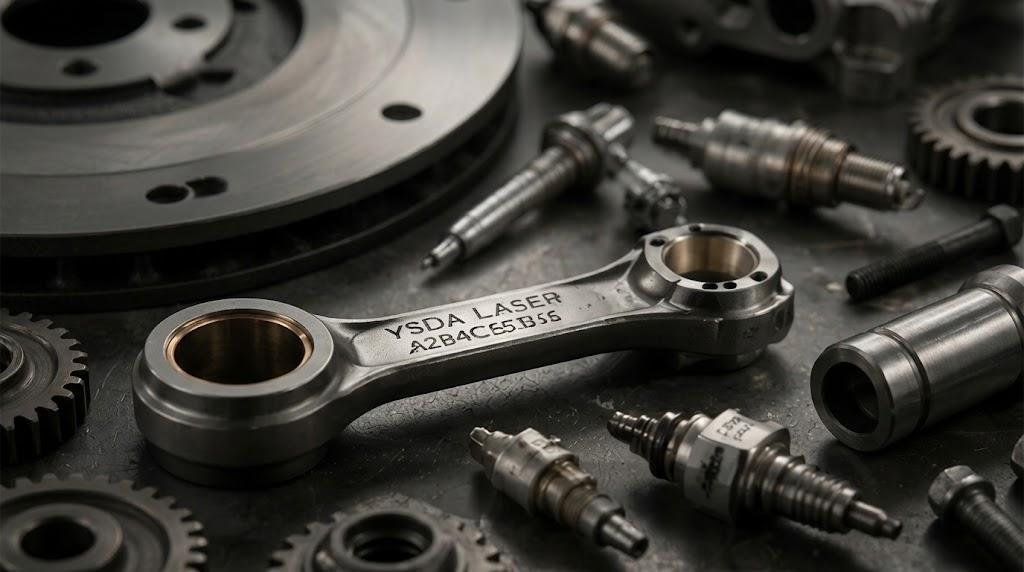
Laser engraving machine vs laser marking machine is a common question for manufacturers, machine buyers, and production managers. Although these two terms are often used in the same way, they can describe different laser processes.
Both machines use a focused laser beam to create permanent results on a surface. However, the depth, purpose, speed, and material requirements can be different.
So, which machine is right for your factory? The answer depends on what you want to mark, how deep the result needs to be, and how the machine will be used.
What Is a Laser Marking Machine?
A laser marking machine uses a focused laser beam to create a permanent mark on a material. In many applications, the goal is not to remove a large amount of material. Instead, the laser changes the surface color, texture, or finish.
For example, manufacturers use laser marking machines to create:
-
Serial numbers
-
QR codes
-
Barcodes
-
Logos
-
Product names
-
Part numbers
-
Batch codes
-
Safety symbols
This makes laser marking useful for product identification and traceability.
Yuanshida offers several types of laser marking machines, including handheld, desktop, and benchtop systems. Its product range includes fiber, UV, and CO₂ laser machines for different materials and production needs.
What Is a Laser Engraving Machine?
A laser engraving machine removes material from the surface to create a visible recessed design.
Compared with surface marking, engraving usually creates a deeper result. The laser passes over the material and removes small layers according to the programmed design.
Laser engraving can be used for:
-
Deep logos
-
Decorative designs
-
Text
-
Serial numbers
-
Patterns
-
Identification marks
-
Custom parts
The required depth depends on the material, laser power, speed, frequency, and number of passes.
For some industrial parts, engraving is useful when the mark needs to remain visible after surface wear or further processing.
Laser Engraving Machine vs Laser Marking Machine
The main difference is how the laser interacts with the material.
| Feature | Laser Marking Machine | Laser Engraving Machine |
| Main purpose | Surface identification | Material removal |
| Typical depth | Shallow | Deeper |
| Common uses | QR codes, logos, serial numbers | Deep logos, designs, durable identification |
| Processing speed | Often very fast | Depends on engraving depth |
| Material removal | Low | Higher |
| Typical industrial use | Traceability and product coding | Permanent or deeper part marking |
However, the line between the two is not always strict. Many modern laser systems can perform both marking and engraving by changing the laser settings and processing method.
Therefore, buyers should focus on the actual application instead of choosing a machine based only on its name.
Which Laser Machine for Metal Marking?
If you are asking which laser machine for metal marking, a fiber laser is often a strong choice.
Fiber laser systems are widely used for metals such as:
-
Stainless steel
-
Carbon steel
-
Aluminum
-
Brass
-
Copper
-
Titanium
-
Some coated metals
A laser marker for metal can create clear and permanent marks without using ink, labels, or other consumables.
For example, a fiber laser marking machine can be used for automotive parts, hardware, tools, electronic components, and mechanical parts.
Yuanshida's product range includes desktop and benchtop fiber laser marking machines. Its professional desktop fiber system is designed for permanent marking on metal parts and can support continuous industrial operation.
Why Choose a Laser Marking Machine for Metal?
A laser marking machine for metal can offer several advantages for industrial production.
Permanent Identification
Laser marks can remain clear during normal handling and use. This makes them suitable for serial numbers, product codes, and traceability.
No Ink or Labels
Laser marking does not require traditional printing consumables. This can simplify production and reduce material waste.
High Precision
A focused laser beam can produce small text, fine lines, QR codes, and detailed logos.
Fast Processing
For many production applications, laser marking can process parts quickly. Flying laser systems can also mark products on moving production lines. Yuanshida offers benchtop flying fiber, UV, and CO₂ systems for industrial applications.
Flexible Applications
A laser marker can be used for different products and marking layouts. Once the design is prepared, operators can change text, numbers, codes, or logos through the control software.
Fiber, UV, or CO₂: Which Laser Marker Should You Choose?
The laser source is another important factor.
Fiber Laser Marker
Fiber laser markers are commonly used for metal applications. They are suitable for many industrial parts and can provide high-speed, high-precision marking.
If your main requirement is metal identification, a fiber laser marker for metal is often the first option to consider.
UV Laser Marker
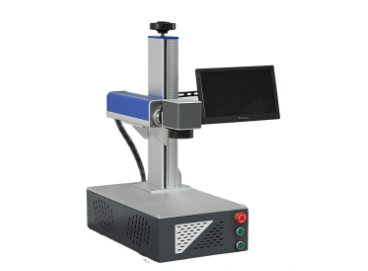
UV laser machines use a shorter wavelength and can provide low-heat processing. They are useful for delicate or heat-sensitive materials.
Yuanshida's UV laser marking machines use a 355 nm laser source. They are designed for fine marking on materials such as plastics, glass, ceramics, and some metals.
CO₂ Laser Marker
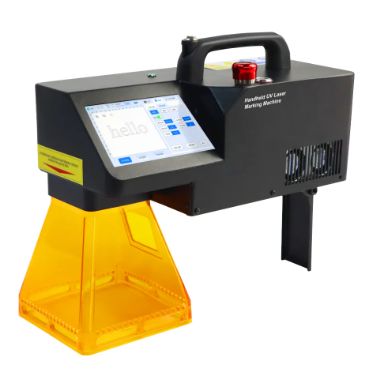
CO₂ laser marking machines are commonly used for non-metal materials such as wood, plastic, carton, leather, and glass.
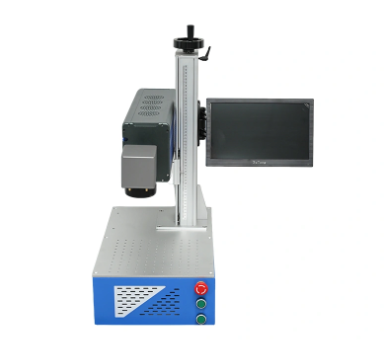
Yuanshida offers desktop and benchtop CO₂ laser marking systems for applications such as product coding and packaging.
How to Choose the Right Laser Machine
Before buying a machine, consider these five points.
1. Material:
First, identify the materials you need to process. Metal, plastic, glass, wood, and other materials may require different laser sources.
2. Marking depth:
Do you need a surface mark or a deeper engraved mark? This will affect the required laser power and processing method.
3. Marking content:
Consider whether you need simple text, logos, QR codes, barcodes, or detailed graphics.
4. Production volume:
For small batches, a desktop or handheld system may be practical. For high-volume production, a benchtop or flying laser system may offer better integration and speed.
5. Part size and shape:
Large or irregular parts may benefit from a handheld laser marker. Smaller parts may be easier to process with a desktop or benchtop system.
Laser Marking Machine or Laser Engraving Machine: Which One Is Better?
There is no single answer.
If your main goal is fast, clear, permanent identification, a laser marking machine is usually the better choice.
If you need deeper material removal, a laser engraving process may be more suitable.
For metal parts, a fiber laser marking machine is often a practical starting point. For delicate plastics, glass, or other heat-sensitive materials, UV laser technology may be a better fit. For wood, carton, leather, and many non-metal materials, CO₂ systems can be a suitable option.
The best choice ultimately depends on your material, marking depth, production speed, part size, and application.
Find the Right Laser Marking Machine for Your Application
Choosing between a laser engraving machine and a laser marking machine becomes easier when you start with the application.
For metal parts, look at fiber laser systems. For fine and low-heat processing, consider UV technology. For many non-metal materials, CO₂ laser machines can provide an effective solution.
Yuanshida provides handheld, desktop, and benchtop laser marking machines, including fiber, UV, and CO₂ models. This range allows manufacturers to select equipment based on their material and production needs.
If you are still unsure which laser machine for metal marking is right for your application, compare the material, required marking depth, production volume, and part size first. These factors will help you select a laser marker that fits your actual production process.


