GS1 DataMatrix and Laser Marking for Product Traceability
News Details
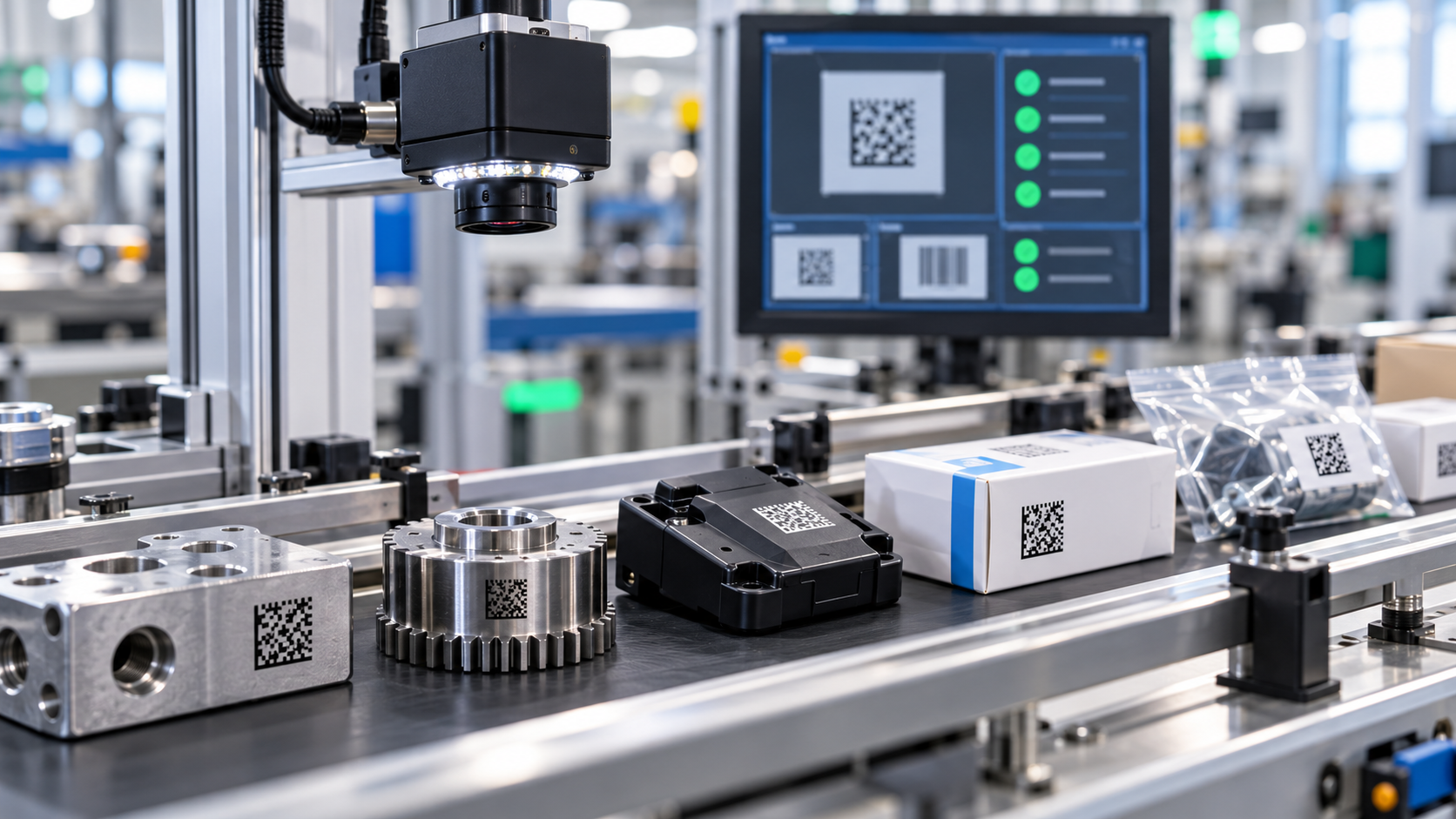
Nowadays, product traceability has become an essential requirement in many industries. From automotive components and electronics to medical devices, tools, packaging, and metal parts, each product usually requires a clear code that can be read, verified, and tracked.
For this reason, numerous factories utilize laser marking to create permanent codes on product surfaces. These codes may include QR codes, barcodes, serial numbers, batch numbers, and GS1 DataMatrix codes.
Compared with ink, stickers, or labels, laser marks are more durable. They are applied directly on the product surface, enabling them to withstand handling, storage, heat, oil, and abrasion. As a result, GS1 DataMatrix laser marking is an excellent option for businesses that require stable and long-term product identification.
What is GS1 DataMatrix?
GS1 DataMatrix is a compact two-dimensional code used to store product information in a limited space. It can contain valuable data such as item codes, batch numbers, serial numbers, expiration dates, and production details.
Since it can store more data than a standard one-dimensional barcode, it is commonly utilized on small parts, medical products, electronic components, tools, and industrial parts.
Additionally, a GS1 DataMatrix code can be scanned and linked to digital records. This assists manufacturers, distributors, and end-users in verifying the origin of a product, its production date, and the batch it belongs to.
Why use laser marking for traceability coding?
Traceability codes must be legible, stable, and easily scannable. If a code becomes damaged or unreadable, tracking the product may become difficult. This can lead to delays, quality problems, or additional expenses.
Laser marking resolves many of these issues. A laser beam marks the product surface without the need for ink or labels. Consequently, the mark is resistant to peeling, fading, or wearing off.
Furthermore, laser systems can mark extremely small codes with high accuracy. This is beneficial when the product has limited space. For instance, a small metal component, plastic casing, tool, or electronic part might only have a small area for marking.
QR code laser marking vs. GS1 DataMatrix
QR code laser marking is widely used for product links, user manuals, after-sales support pages, and general product identification. QR codes are easily readable by many scanners and smartphones.
However, GS1 DataMatrix is often chosen when strict product data specifications are necessary. It is compact and can store structured information in a very small area. This makes it ideal for parts with limited space or products that need complete traceability.
Both types of codes can be marked using lasers. The appropriate choice depends on your industry, scanning equipment, product size, and data requirements.
Applications of barcode marking machines
A barcode marking machine can be employed in various B2B sectors. Typical applications include metal components, automotive parts, tools, electronics, packaging, medical supplies, pipes, profiles, jewelry, machinery parts, and plastic components.
For metal parts, a fiber laser marking machine can mark strong and clear codes on stainless steel, aluminum, carbon steel, brass, and coated metal surfaces.
For plastics, glass, ceramics, and sensitive materials, a UV laser marking machine can produce fine marks with minimal heat impact.
For cardboard boxes, paper, wood, leather, rubber, and numerous packaging materials, a CO₂ laser marking machine can facilitate fast and clean marking.
Yuanshida provides a variety of laser marking machines, including handheld, portable, desktop, benchtop, fiber, UV, and CO₂ models. You can explore the product range on the Yuanshida website and the All Products page.
Advantages of GS1 DataMatrix laser marking
Firstly, laser marking creates permanent codes. This helps maintain the readability of product data throughout production, packaging, transportation, and usage.
Secondly, it reduces the need for consumables. There is no requirement for ink, solvents, labels, or ribbons. This can lower daily operating costs and minimize maintenance efforts.
Thirdly, laser marking is environmentally friendly. It can support modern production lines that require stable and low-waste marking processes.
Additionally, it offers flexibility. A single machine can mark numbers, letters, logos, QR codes, barcodes, and GS1 DataMatrix codes. Operators can update the marking file when the product batch changes.
Most importantly, laser marking helps enhance traceability. Each product can carry a unique code. This simplifies quality tracking, recall management, counterfeit prevention, and after-sales support.
How to choose the right laser marking machine
Before purchasing a barcode marking machine, begin by considering your material. Metal, plastic, glass, wood, paper, leather, and coated surfaces may require different types of lasers.
Next, determine the code size. If you need a very small GS1 DataMatrix code, you require high marking precision and consistent focus.
Then, evaluate your line speed. For slow or small-batch operations, a desktop or handheld laser marking machine may suffice. For high-volume production, a benchtop or inline laser marking system might be more suitable.
Also, take into account the scanning performance. A good code is not only visible but also easily scannable. Therefore, sample testing is crucial before mass production.
Finally, consider the software and data input. If you require dynamic codes, serial numbers, batch data, or database connectivity, ensure the system can accommodate your workflow.
Important questions before ordering
When selecting a laser marking system, ask the following questions:
What material do we need to mark?
Do we need QR code laser marking, barcode marking, or GS1 DataMatrix laser marking?
How small is the code?
Will the code be scanned by a fixed or handheld scanner?
What is the required marking speed?
Do we need static marking or inline marking on a moving production line?
Will the machine integrate with our production data system?
Can the supplier test our actual samples before placing an order?
What training and after-sales support are provided?
These questions assist you in selecting a machine that meets your actual production needs, rather than just the product catalog specifications.
Why choose Yuanshida?
Yuanshida specializes in industrial laser marking equipment for international customers. Its machines are utilized in hardware, automotive components, pipes, profiles, electronics, jewelry, machinery parts, gifts, crafts, packaging, and other industries.
For traceability coding, Yuanshida offers various machine configurations, including handheld, portable, desktop, and benchtop laser marking machines. Based on your material and production line requirements, Yuanshida can assist in selecting the appropriate fiber, UV, or CO₂ laser solution.
Whether you need serial numbers on metal parts, QR codes on packaging, or GS1 DataMatrix codes on small components, Yuanshida provides practical equipment options for clear and durable marking.
Conclusion
GS1 DataMatrix laser marking is an effective solution for product traceability. It enables manufacturers to create clear, compact, and permanent codes on various materials.
With the right laser marking machine, your factory can improve product identification, reduce consumables, and simplify the management of traceability codes.
Before placing an order, test your actual samples, verify code readability, and select the laser type that suits your material. This will make your marking process more efficient, cleaner, and reliable.


